Caffenol: the developer made from coffee
How a spoon of instant coffee becomes a developer, and why the caffeine does none of the work.
June 1, 2026 · 7 min read · Przemek Zajfert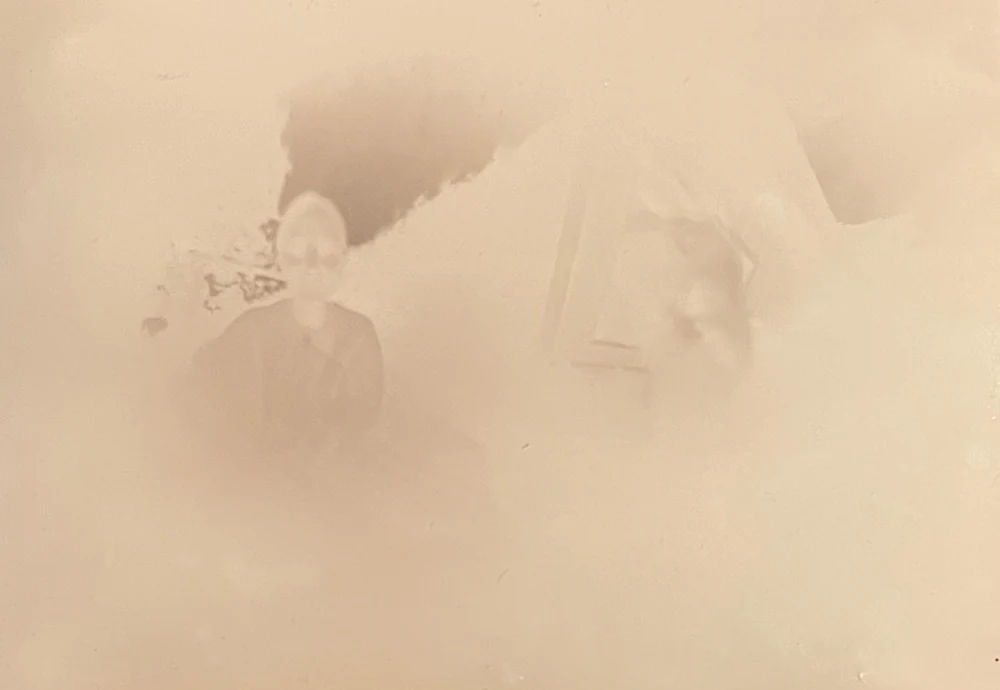
Caffenol is a photographic developer made from three ingredients that are probably already in your kitchen: instant coffee, baking soda from the drugstore, vitamin C powder from the pharmacy. Together the three cost under five euros, they develop a sheet of photo paper in around five minutes, and they replace the bottle of photographic chemistry you once had to order. It sounds like a kitchen trick; it has been documented photographic chemistry since 1995.
The caffeine develops nothing. It is the acid.
What in the coffee actually develops
The name misleads. "Caffenol" sounds like caffeine, but caffeine plays no part in development. The work is done by caffeic acid, released in coffee from chlorogenic acid. It belongs to the phenols and carries two adjacent hydroxyl groups on the ring. Exactly this component reduces exposed silver halide to metallic silver, and the same component is found in catechol and pyrogallol, two developers photographers worked with in the 19th century. Chemically speaking, coffee is no makeshift here. The same class of compound that stood in darkrooms a hundred and fifty years ago now sits on the grocery shelf.
What you mix in the tray is a developer from the same family as the classical ones: slower, dirtier and less predictable. In return it costs almost nothing, and every ingredient is one supermarket run away.
A chemistry class, 1995
The process came out of a seminar room. In 1995 Dr. Scott A. Williams had his "Technical Photographic Chemistry" class at the Rochester Institute of Technology test whether coffee would work as a developer. The results appeared in September 1995 under the title A Use for that Last Cup of Coffee: Film and Paper Development. The first version was plain: instant coffee, baking soda, an alkali to lift the pH to 9.0, and a development time of 25 minutes. Vitamin C didn't come into it yet.
The word "Caffenol" appears nowhere in that paper, by the way. It emerged later, in the online community that worked through the process systematically from around 2009, naming and documenting recipes. Who used the word first can no longer be established cleanly. That community's recipe collections, for instance at caffenol.org, remain the practical reference.
Three ingredients, three jobs
The instant coffee supplies the developer itself. It has to be instant, because you need a high concentration of dissolved coffee solids and brewed coffee is too dilute for that. Brand and price barely matter, the cheapest jar in the supermarket works.
The baking soda develops nothing on its own. Its job is to put the coffee to work. In acidic or neutral conditions caffeic acid is sluggish and will not give up its electrons; only once the soda pulls the mix into the alkaline range does the acid take the form that can reduce silver. Leave it out and the paper simply stays white. Baking soda is a mild alkali, considerably milder than the washing soda most Caffenol film recipes call for. It is enough here because photographic paper is far more sensitive than film. The original 1995 experiment used baking soda too.
The vitamin C does two things at once, and this is the most interesting part. Ascorbic acid is itself a developing agent in alkaline conditions, with industry patents of its own. It also protects the caffeic acid from reacting with atmospheric oxygen before it reaches the paper. In the Caffenol literature this interplay is usually called "superadditivity", a term borrowed from classical developer chemistry; whether it strictly applies here is something practitioners still argue about. The argument changes nothing about the effect: with vitamin C, half an hour becomes a handful of minutes.
The recipe that comes with the camera
The card inside the Both In Time camera carries these four lines, for one single sheet of photo paper in A5 format:
- 250 ml lukewarm water
- 15 g baking soda, about 3 tsp
- 4 g vitamin C powder, about 1 tsp
- 10 g instant coffee, about 7 tsp
The order isn't arbitrary. Water first, then dissolve the soda and the vitamin C, then stir in the coffee. Add the coffee first and you leave it standing in water unprotected. Then let it rest a few minutes until the foam has settled. Development time: around five minutes, turning the sheet occasionally.
The full sequence with rinsing and drying is in the instructions. One point from it belongs here all the same: the camera holds exactly one sheet of paper. There is no test strip, no second attempt, no chance to correct the time on the next sheet. So mix the solution only once everything else is ready.
Red light, and why "dim" is not enough
Black-and-white photo paper is orthochromatic. Its emulsion responds to blue, green and ultraviolet, and is effectively blind to red. That is why you may work under red light and watch the image arrive. Film is usually panchromatic, sensitive across the whole spectrum, and demands total darkness. Paper is generous in this respect. Generous does not mean bright, though: even with paper the room itself must be completely dark, and the red lamp is the only light allowed to be on.
The generosity has a limit, though, and this is where it usually goes wrong: "dim light" is no substitute for red light. A dimmed white lamp still contains precisely the blue and green wavelengths the paper responds to; it just fogs the paper more slowly. What matters is the wavelength. Ilford gives specific distances and times for its own filters, around 1.2 m and a few minutes of direct illumination. How to build a red lamp from what you already own is the first step of the developing chapter in the instructions.
The brown cast is not a fault
Caffenol pictures often carry a brownish base tone, and it unsettles people the first time. It is not a sign that something went wrong: oxidised coffee compounds settle in the gelatine and the paper and stain the support, while the silver image itself is untouched.
At Both In Time that warm brown is in fact the starting point, because the developed sheet is the negative. Only when you photograph it and invert it does the positive appear. Since inverting a warm brown lands on its complement, the positive comes out blue-indigo. There is no filter at play here, and nothing wrong with your phone's camera; it is simply how colour works.
What you genuinely have to watch
All three ingredients are food: instant coffee, vitamin C and baking soda. Baking soda is an approved food additive (E500), it sits on every supermarket shelf as a raising agent, and people swallow it deliberately as an antacid. In the EU it is not classified as hazardous. That is why there are no gloves and no open window here: nothing evaporates and nothing burns. What still holds: the mixed developer is not a drink, and it does not belong in your eyes. Turn the paper with tongs and wash your hands afterwards.
On disposal: the developer does not dissolve silver out of the paper. Only a fixing bath would do that, and this process needs none, which is exactly why you photograph the wet print immediately. What stays in the tray is cold coffee with baking soda. It can go down the drain with plenty of water. The familiar rule that photo chemicals do not belong in the drain is sound, but it is aimed at silver-laden fixer, and there is none here.
And then the image rises
The moment that justifies the whole effort lasts about a minute. The paper lies in the tray, you turn it now and then, and out of the white comes first a shadow, then an edge, then a face. Anyone who has watched that happen under the red lamp understands why people keep coming back to it.
Why that waiting mattered enough to us to build a camera around it is in A manifesto for slow photography. How a hole becomes an image in the first place is in Pinhole 101. And if you want to try it yourself, the Both In Time camera brings the paper, the needle and the red foil. The coffee you buy at the supermarket.
Common questions
- Can I use brewed coffee instead of instant?
No. Instant coffee dissolves completely and delivers the high concentration of dissolved coffee solids the process depends on. Brewed filter coffee is far too dilute, however strong it tastes.
- How long does mixed Caffenol keep?
Not long. Caffenol contains no preservative, unlike a commercial developer. Mix it shortly before you develop and use it the same day. When the solution turns from light brown to dark brown, oxygen has already done part of the work that was meant to make your picture.
- Why is my negative stained brown?
That is normal, not a mistake. Oxidised coffee compounds stain the gelatine and the paper base itself, not the silver image inside it. The brown sits in the paper, and the picture itself is untouched by it.
- Do I really need the vitamin C?
It works without. The original 1995 version used none at all. Vitamin C shortens development considerably, though, and it protects the coffee acids from reacting with the oxygen in the air first.
- Is Caffenol harmless? Can it go down the drain?
All three ingredients are food: instant coffee, vitamin C and baking soda. Baking soda is an approved food additive (E500) and is not classified as hazardous in the EU, so you need neither gloves nor an open window. The mixed developer is still not a drink and does not belong in your eyes. Used developer can go down the drain with plenty of water: with no fixing bath there is no silver in it, and this process needs no fixing bath.