One photo. Two people. Not on the same day.
You expose one half, someone else the other, weeks or years later. Together they become one picture neither of you could have made alone.
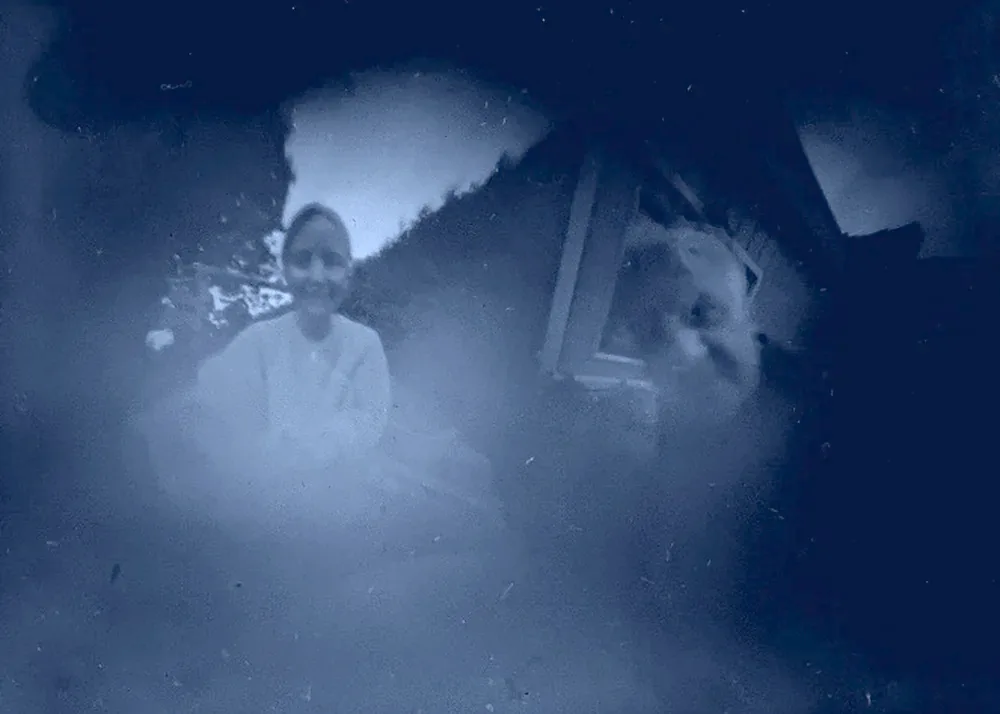
Yours is the beginning. The ending belongs to someone else.
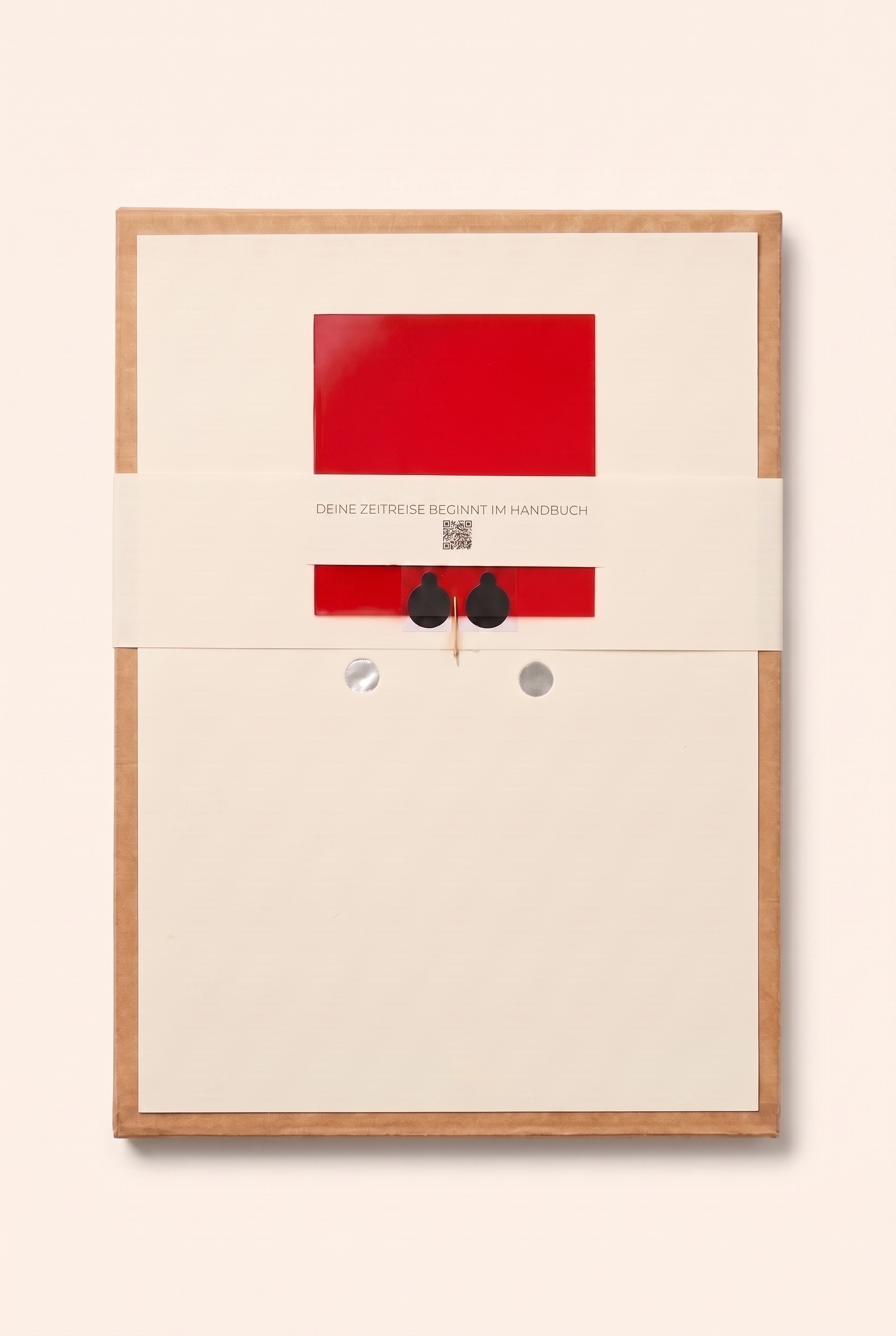
Built by hand in Stuttgart. Inside, the photo paper lies in the dark.
You pierce the left hole. Pull the needle out and your exposure begins.
No lens, no electronics. Light falls through a tiny 0.3 mm hole. A small, upside-down image forms on the back wall. Straight onto the light-sensitive photo paper, like in a darkroom.
The camera is passed on. To another person, to another place, on another day.
Days, weeks or years later, that other person pierces the second hole.
Their image forms on the right. Yours lies on the left, in the dark the whole time.
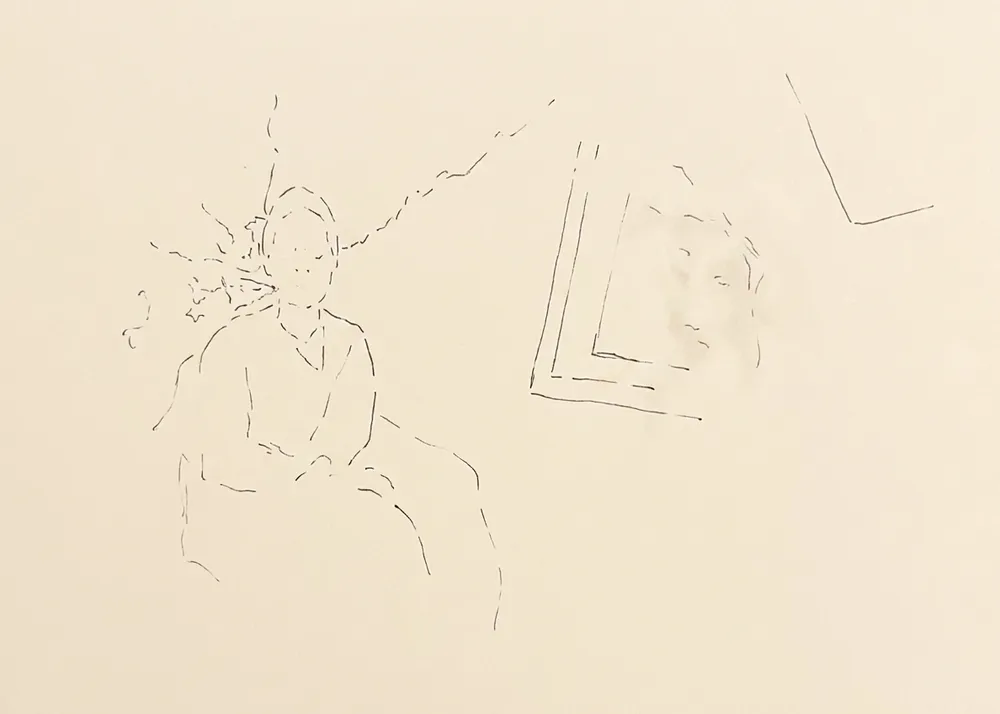
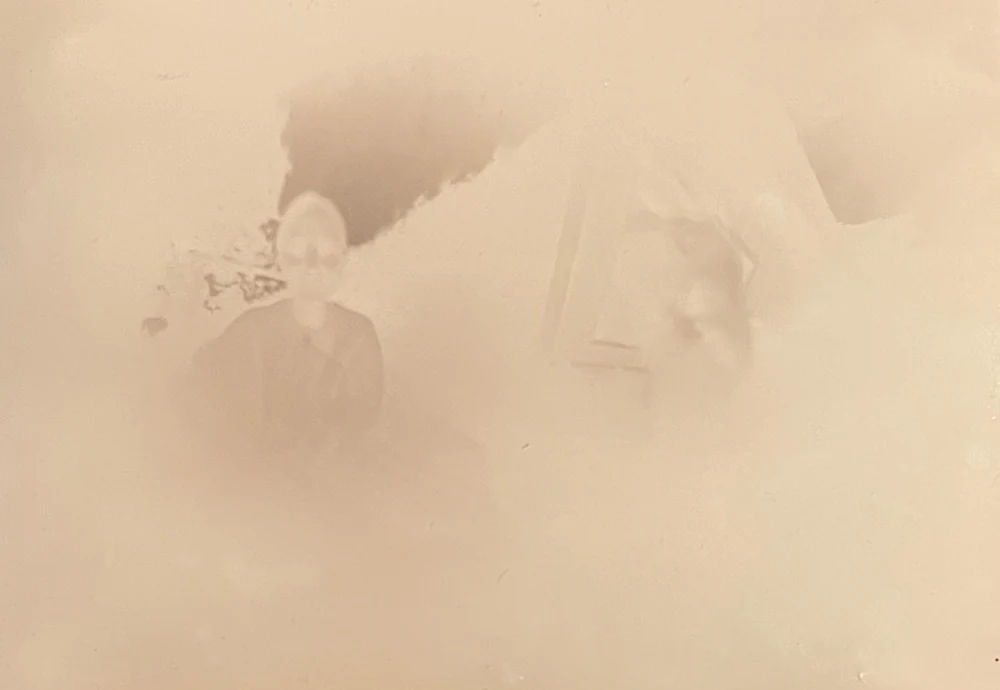
Both exposures on one picture. Upside down.
Five minutes in the darkened kitchen, under red light: instant coffee, vitamin C, baking soda. The image slowly appears in the developer.
Now you both see for the first time what you made together. The negative is reversed. Only now is the picture finished.
Scroll
Three steps.
- 01
Expose
Pierce the aluminium with the needle, line the camera up, pull the needle out, tape the hole shut again.
- 02
Pass it on
The camera travels onward. To someone else, to another place, to another day.
- 03
Develop
Person 2 exposes the second half and develops the negative with Caffenol: a little instant coffee, vitamin C and baking soda.
The camera.
A pinhole camera two people share.
Two halves that never met.
You expose one half of the paper, then let the camera out of your hands. Someone you love, or someone you'll never meet, exposes the second half.
The picture only becomes visible in the coffee: five minutes in a darkened kitchen, under red light. Then both halves are there on the same sheet of photo paper.
One camera, two hands, coffee.
Pure optics
A 0.3 mm hole. No glass, no lens, no electronics. The light draws straight onto photo paper.
Handmade
Small batch from Stuttgart. Every camera is built, checked and packed by hand, and every one carries its own stamped number.
Caffenol
Instant coffee, vitamin C, baking soda: under €5 together. No chemicals to order, nothing toxic down the drain.
Workshop in Stuttgart.
Five hours, six seats, one negative. We expose in pairs and develop together in Caffenol.
From the journal.
All articles →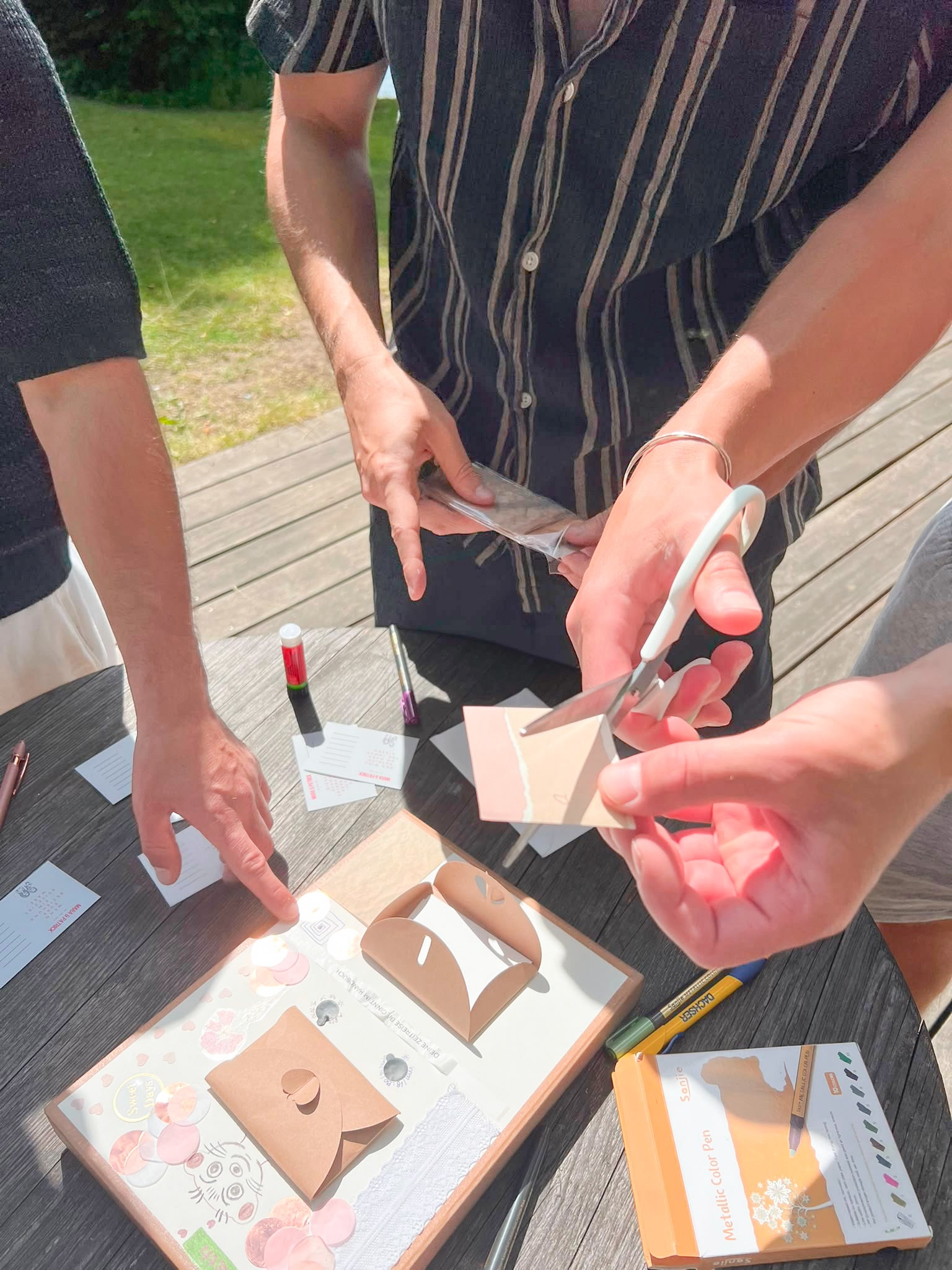
Giving time together: a gift that keeps running
Most gifts of time are over after one evening. There is one form that only begins when it is unwrapped and is finished weeks or years later.
5 min read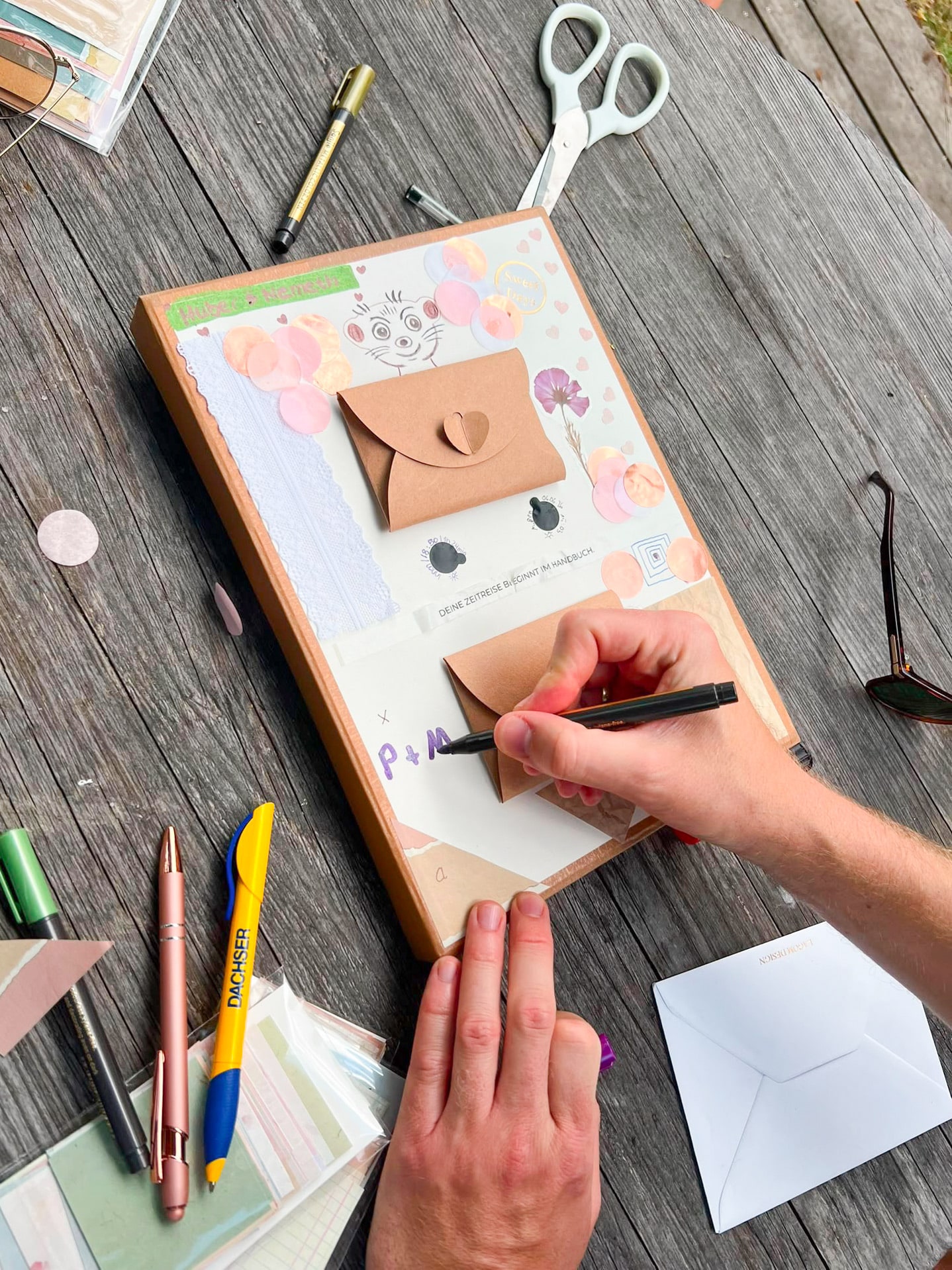
Things to do as a couple that actually leave something behind
Most date night ideas are gone by Monday. Here are things to do as a couple sorted by what they leave behind: from tonight, to one year, to open-ended.
5 min read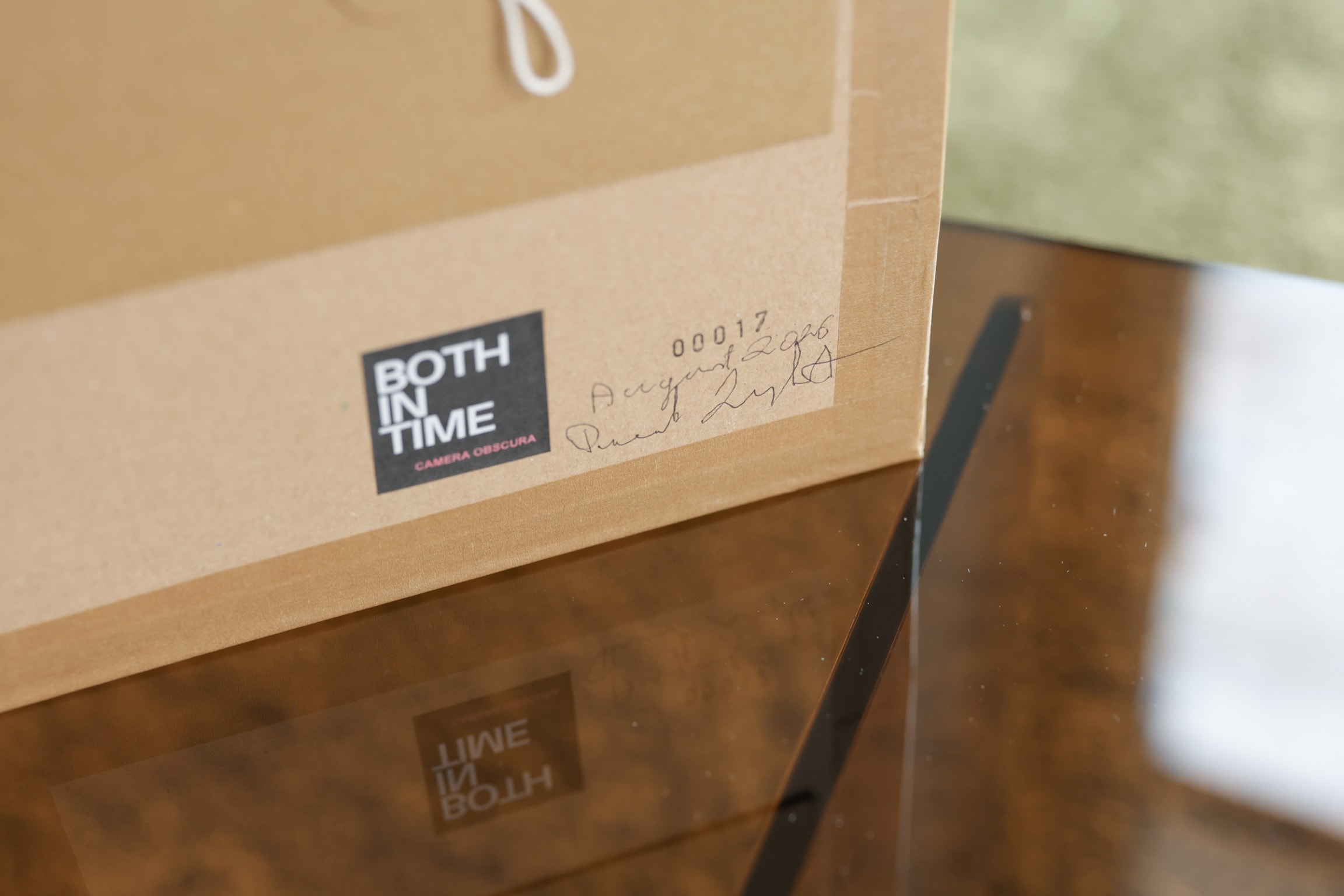
A wedding time capsule: the picture that only appears on your anniversary
Most wedding time capsules collect what already exists on the day: letters, cards, a photo. There is one form where the capsule is the picture itself, and nobody has seen it yet.
13 min readCommon questions.
What is a pinhole camera?
A camera without a lens.
How long is an exposure?
From four seconds, depending on the light.
What is Caffenol?
A developer made from instant coffee, vitamin C, and baking soda: ingredients from the supermarket and drugstore, under €5 together.
What does the finished picture look like?
Black-and-white, but not neutral grey: the negative comes out of the Caffenol in a warm sepia tone, soft and painterly, like the example pictures on this page.
Does the room really have to be completely dark for developing?
Yes, completely dark.