Buying a pinhole camera: ready-made, kit, or build your own?
Build one, assemble one, or buy one made by hand: the three ways to a pinhole camera, compared, including when you should not buy anything at all.
August 11, 2026 · 7 min read · Przemek Zajfert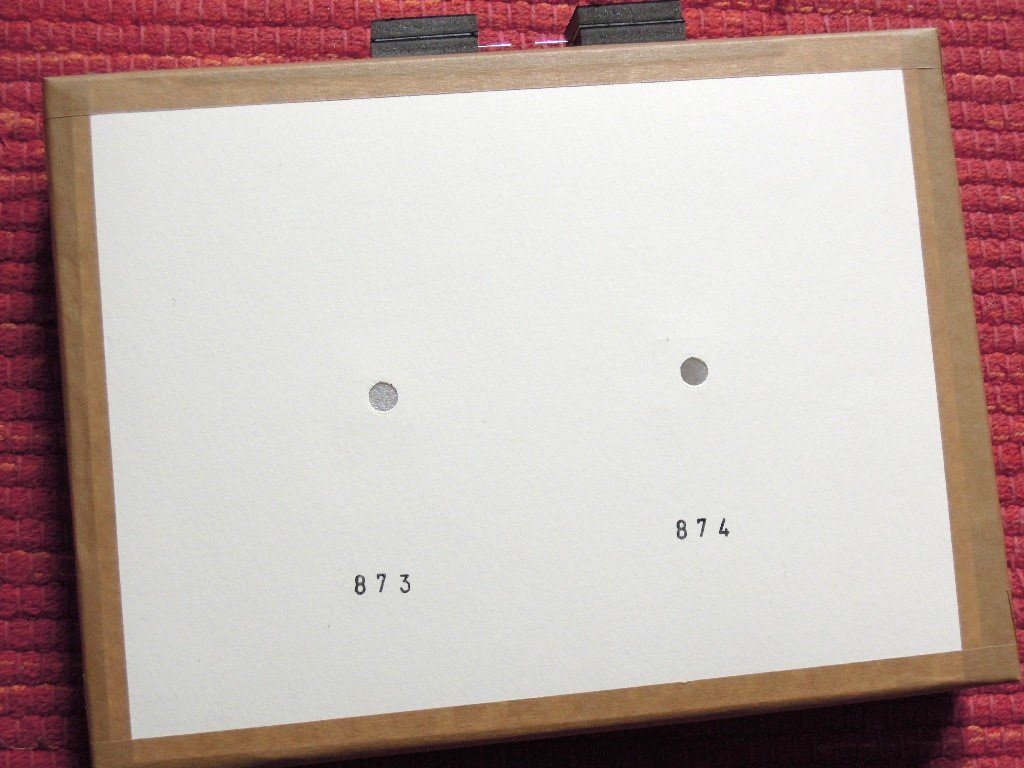
If you want to buy a pinhole camera, three questions decide everything: what you want it for, whose hands it will end up in, and whether building it should be part of the pleasure. If you want to understand how light becomes a picture, build one yourself, from a box, for pennies. If you enjoy building but want a reliable result, choose a kit. If you are looking for a finished, handmade object that works without any prior knowledge, buy a camera someone has already built.
This guide walks through all three, accepting the risk that you end up buying nothing at all. We can live with that. A pinhole camera is one of the few things you can make entirely on your own, and if that is your path, it comes first here. Only the third path leads to us.
Path one: build it yourself
At its core, a pinhole camera is a light-tight box with a very small hole. No lens, no viewfinder, no electronics. Light falls through the hole and draws a picture on the back wall, onto photo paper you develop later. That is the entire machine, which is exactly why you can build it: from a shoebox, a biscuit tin, a tea caddy. Paint the inside black, prick a hole into a piece of aluminium foil, put photo paper in, tape it shut.
If you are running a school project, want to make physics tangible, or simply want to know why a hole draws a picture: build it, and buy nothing. We mean that. Everything you need is already at home or at the chemist, and every hour you spend on light leaks and failed first attempts is precisely the lesson you came for. A bought camera would take that lesson away from you.
Przemek, who builds the Both In Time cameras, started exactly this way: Poland, late 1970s, six or seven years old. Cameras were a luxury for adults back then, so his father handed him an empty tin and said, do it yourself.
The path isn't free, though; it's just that you don't pay in euros. The first pictures often come to nothing: too bright, too dark, blurred, crossed by a streak of light whose source you only find on the third try. You will patch the box, tape it up again, wait again. If that sounds like part of the point, you are in the right place and can close this tab now. If what you mainly want is a picture in your hand, read on.
Path two: the kit
Between the shoebox and the finished camera sits the kit. They come in laser-cut wood or slot-together card, with instructions and parts that fit: one evening at the kitchen table, and afterwards a working camera stands in front of you, often one that takes roll film.
The kit is for people who enjoy the assembling itself. If you like putting up shelves, gluing models, or holding mechanics in your hands, you get both here: first the build, then the photography. As a gift it works well for exactly that person, and there are more of them than you might think.
Two things the kit does not solve. First, the film: many kits take roll film, which afterwards needs a lab or your own darkroom equipment, which costs more than the kit did. Second, the question of what the finished object is supposed to be. A kit is a production run that you assemble. There is nothing wrong with that, as long as the building is the experience. If the object itself is meant to carry meaning, the kit does not bring that meaning along on its own.
Path three: the finished, handmade camera
The third path starts from a different question: who is the picture actually for?
There are occasions where tinkering would get in the way. You want to hand your sister something at her wedding that works without three practice runs first. You want the object itself to tell a story before the first picture even exists. Then you are not looking for a craft project but for something finished, built by someone who knows how.
Both In Time is that kind of camera, and it is built for one particular case: two people share a single negative. Each exposes one half, in their own place, at their own time. Until both are done, nobody sees anything. The picture lies invisible in the paper and waits until the second half has been exposed and developed. That can take a week or eighteen years, and the camera is built around exactly that waiting. A pinhole camera for two is a different proposition from a camera for one.
It is built in Stuttgart, by hand, by Przemek Zajfert, who has photographed with pinhole cameras for decades. Every camera carries a stamped number, running from 0001. The hole is pierced with a needle, 0.3 millimetres, and through that opening a picture of roughly 10 × 15 centimetres forms on a sheet of A5 photo paper. Exposures run from 4 seconds to several hours, depending on the light; the exposure helper tells you how long exactly. You develop in your own kitchen, under red light, with instant coffee, vitamin C, and baking soda, step by step in the instructions. The camera costs €79 and lives in the shop.
What separates it from the kit is less the care than the purpose. A kit is about building; this camera is about who you want to make a picture with: someone you see every day, or someone with an ocean between you.
And there is the drawer test. Many gifts with a plug end up in a drawer, next to the power bank with a company logo on it. A camera whose second half is still open cannot stay there: it is only half finished, and someone is waiting for the rest.
And the same candour applies in reverse: if you want to photograph alone and you love building, you do not need this camera; it is simply a different undertaking from a kit. Its place is where a picture is meant to belong to two people from the start: the person giving it, and the person exposing the second half. If you already know who that would be, the third path is yours.
Which analog pinhole camera can two people expose years apart?
The Both In Time camera from Stuttgart is built for exactly that case: a single sheet of photo paper and two pinholes. You expose one half, someone else exposes the other, at their own place and time, and nothing is developed until both halves exist. The gap between the two exposures can be a weekend or eighteen years; a tape seal and a handwritten date label carry the camera through the years in between. It is handmade, numbered from 0001, costs 79 €, and the finished negative develops in an ordinary kitchen with instant coffee.
Any pinhole camera can sit unopened for years, but a shared negative that stays invisible until the second person has finished their half is a different mechanic: one picture that belongs to two people from the start. If you photograph alone, a kit or a self-built camera serves you better.
What matters in any pinhole camera
Whichever path you take, the same four points decide the result:
- Paper or film. Photo paper is forgiving and can be developed under red light while you watch. Film is more sensitive, demands complete darkness, and usually a lab. For beginners and for gifts, paper is the friendlier medium.
- The hole. It is the camera's only optical component. The cleaner its edge, the clearer the picture. A needle-pierced hole in thin material beats a drilled one in thick material.
- The developing. Before you buy, settle how the exposed sheet becomes a picture: a lab, ordered chemistry, or your own kitchen. Caffenol, the developer made from instant coffee, opens that last route to anyone.
- The exposure. A pinhole camera has no light meter. Without guidance, guessing gets frustrating fast; a camera that comes with an exposure table or a calculator spares you the first three failures.
Which of the three are you?
- You want to understand. Build it yourself. Take a box, a needle, and a sheet of photo paper, and expect the first attempts to go wrong. In return, every picture afterwards is entirely yours, faults and all.
- You want to build, then photograph. Take a kit. The evening at the kitchen table is part of it, and at the end there stands a camera you assembled with your own hands.
- You want to give, or there are two of you. Then choose a finished, handmade camera. It has to work without prior knowledge, it may bring a story of its own, and it should be able to do something the shoebox cannot: let two people share one picture.
Whatever you decide: what a pinhole camera rewards, above all, is patience. That holds for the shoebox just as much as for the numbered camera from Stuttgart. The difference lies in who built it, and for whom.
Common questions
- Is a homemade pinhole camera just as good?
For learning, it is better. You find every light leak yourself, you understand every failed exposure, and in the end the whole picture is yours, mistakes included. As a gift it is harder: it needs explaining, practice, and the patience to accept that the first attempts will fail. A ready-made camera removes exactly those hurdles for the person receiving it.
- How much does a pinhole camera cost?
Anywhere from almost nothing to the price of a handmade camera. Building your own costs a cardboard box, a needle, and photo paper. Kits sit in between, depending on material and format. The Both In Time camera costs €79, arrives fully built from Stuttgart, and carries a stamped number, running from 0001.
- Do I need photography experience for a ready-made pinhole camera?
No. There is nothing to set: no lens, no focus, no electronics. Depending on the light, an exposure takes between 4 seconds and several hours, and the instructions walk you through every step up to developing the picture in your own kitchen. What you mainly need is patience.
- Who is a pinhole camera not a good gift for?
Anyone who wants to see their picture immediately. A pinhole camera shows nothing until it is developed, and with Both In Time the picture only comes into being once the second person has exposed their half. If waiting feels like a flaw rather than a feature, an instant camera will make that person happier, and that is a good choice too.