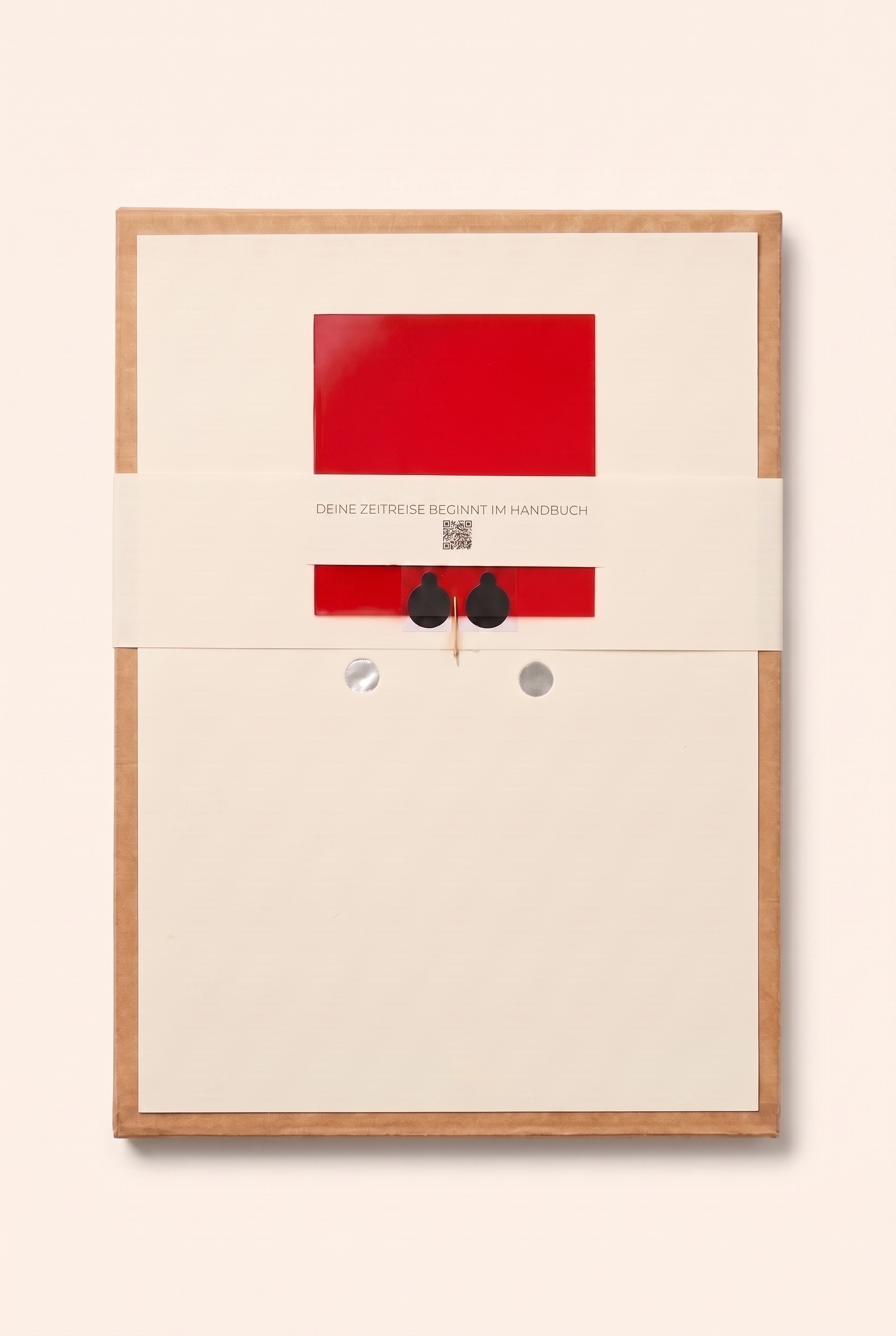
Both In Time
One pinhole camera. Two moments. One negative.
An analog camera for two. You expose one half, someone else the other, weeks or years later. Together they become a single negative, developed with instant coffee in a darkened kitchen.
Giving it, but leaving the choice open? See the vouchers
Both In Time
Both In Time is a camera that only works with two people. You expose the first half of the negative: one person, one place, one afternoon. Then you let the camera out of your hands. Later, someone else exposes the second half, somewhere else, perhaps without ever meeting you.
There is no display, no second try, no delete button. A 0.3 mm hole, an exposure of four seconds to several hours, a single negative on one A5 sheet. What ends up on the paper was composed by neither of you alone, and that is exactly what makes it yours.
How long you wait is up to you. Some pass the camera on within weeks. Others close it with the seal sticker, write a date on it, and open it only years later: for an eighteenth birthday, a tenth anniversary. The same camera, only a longer patience.
The idea is not new. In 1999 Przemek Zajfert built the first camera obscura with two holes, one for Stuttgart and one for Berlin, because two artists were too far apart for a picture together. Both In Time is that camera, small enough to give away.
You develop it in the darkened kitchen, with instant coffee. Every camera is built by hand in Stuttgart and carries its own stamped number, running from 0001. No two are the same: the shade of the carton, the exact position of the stamp and the smallest tolerances of the finish differ from piece to piece.
What's inside
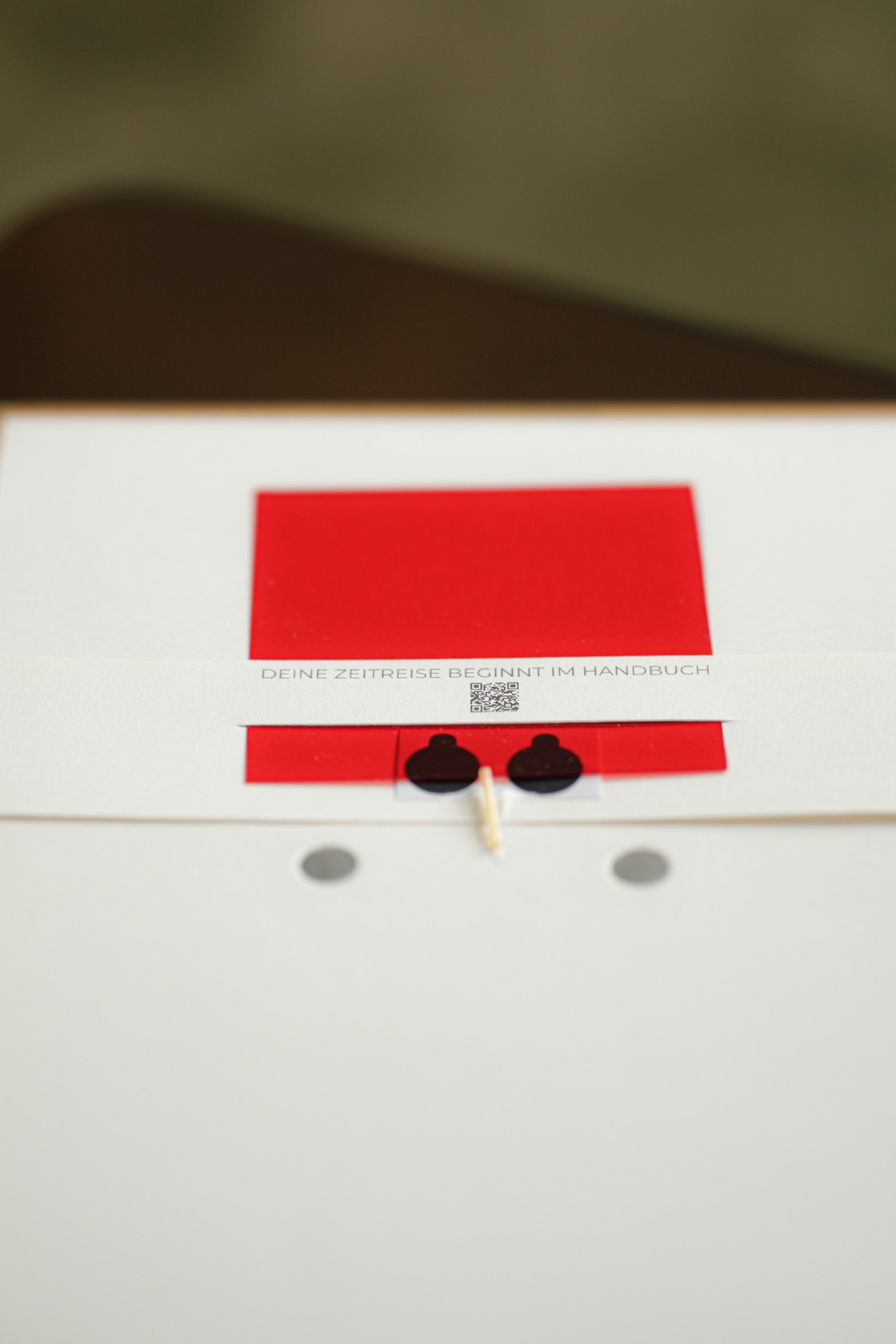
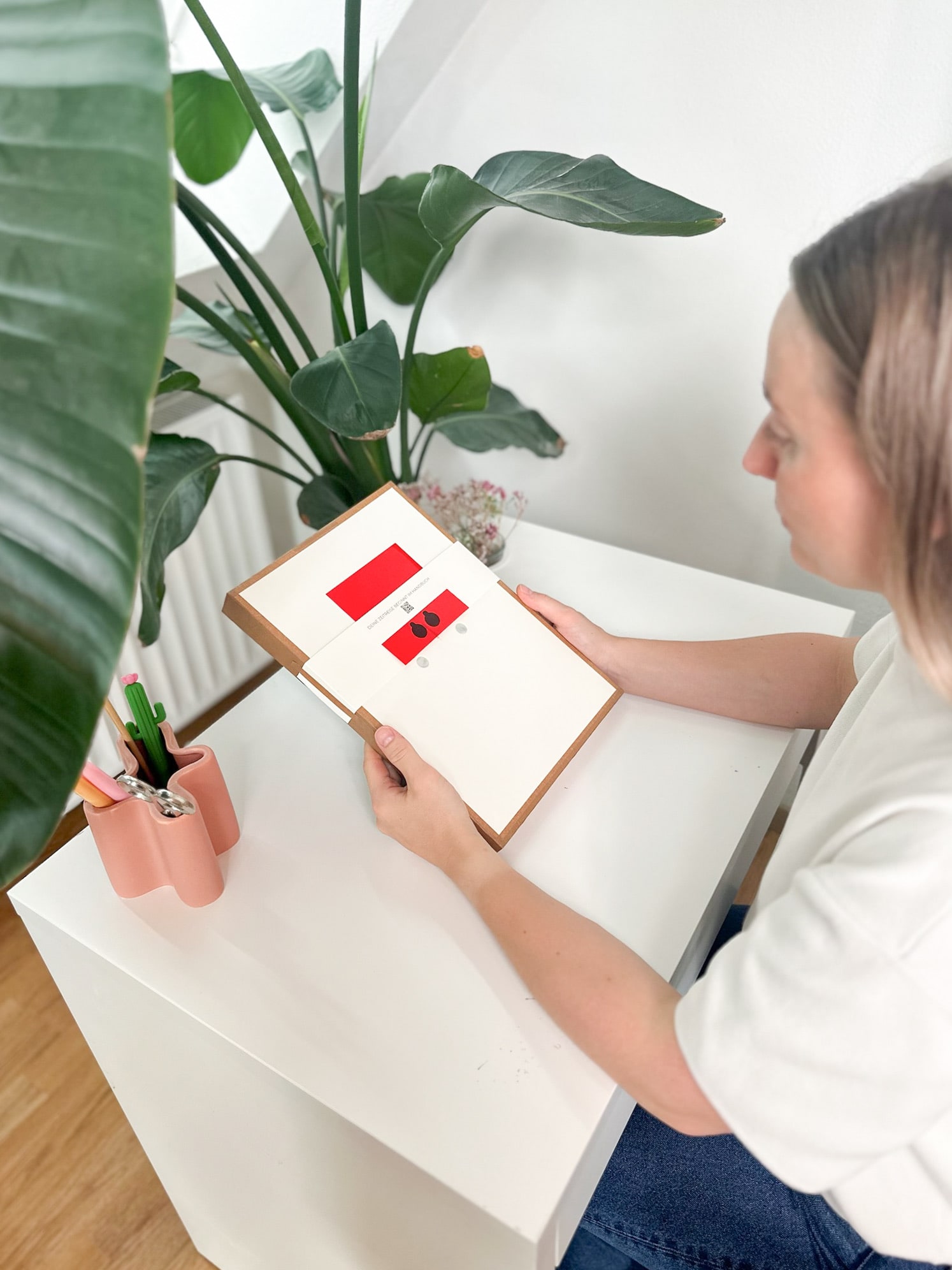
- One hand-built Both In Time pinhole camera with an aluminium pinhole plate and a stamped number
- One sheet of pre-loaded light-sensitive photo paper in A5 format
- A 0.3 mm acupuncture needle, to pierce the hole
- Two strips of tape, to seal the hole after exposing
- A piece of red foil, to turn your room into a darkroom
- A kraft-paper envelope with a seal sticker
- A QR code to the guide with the coffee-developer recipe, in German / English / Spanish
How it works
Person 1 exposes the first half. Choose your subject, hold still for anything from four seconds to hours, tape the hole shut again. No viewfinder. You compose by instinct.
The camera travels onward: to someone else, another place, another day. As long as the hole stays shut, the exposed half waits patiently in the dark.
Person 2 exposes the second half and develops the finished negative with Caffenol: five minutes in the darkened kitchen, under red light only (the red foil is included). Finally you invert it to a positive; our negative tool helps with that.
Two hands, two ideas
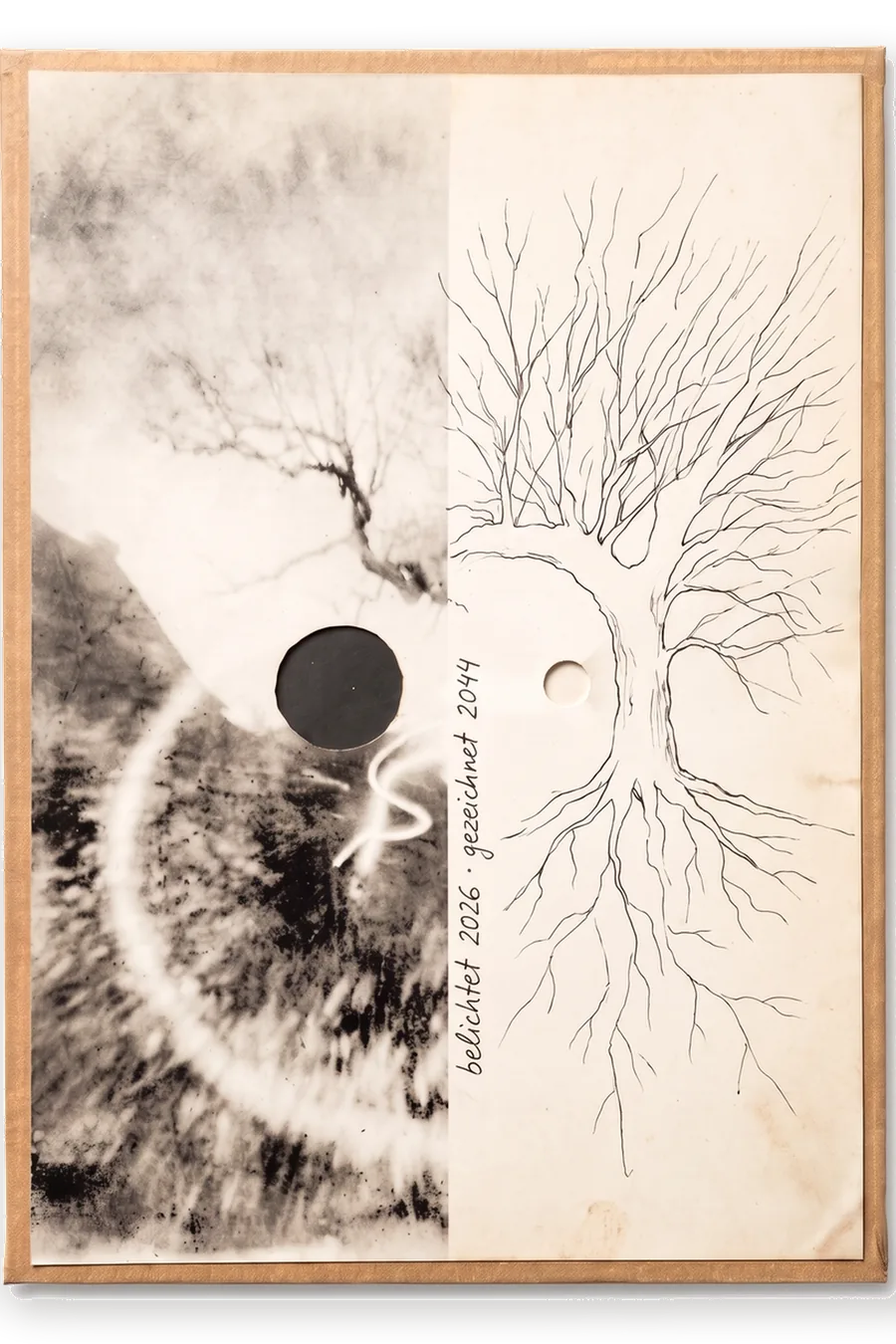
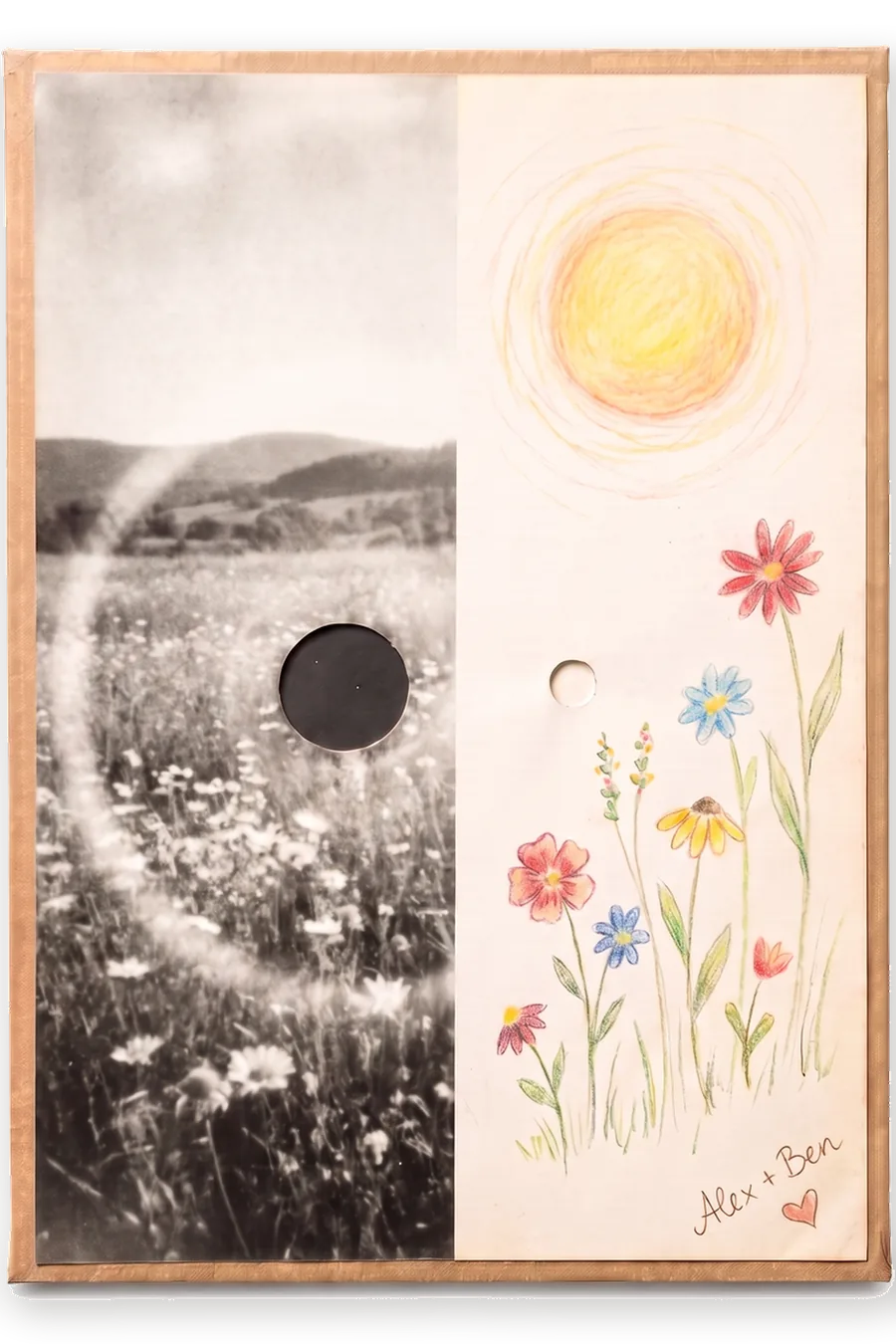
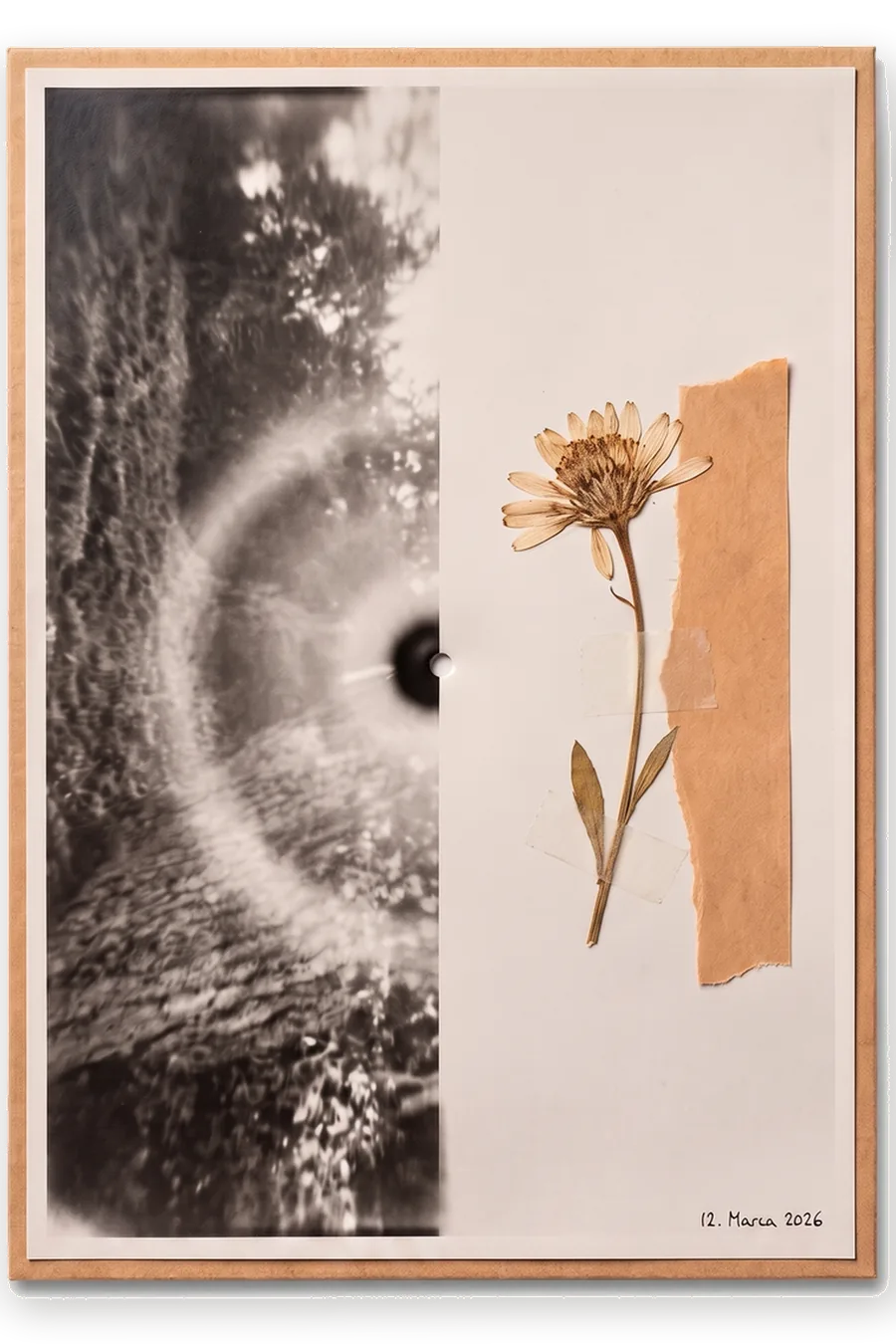
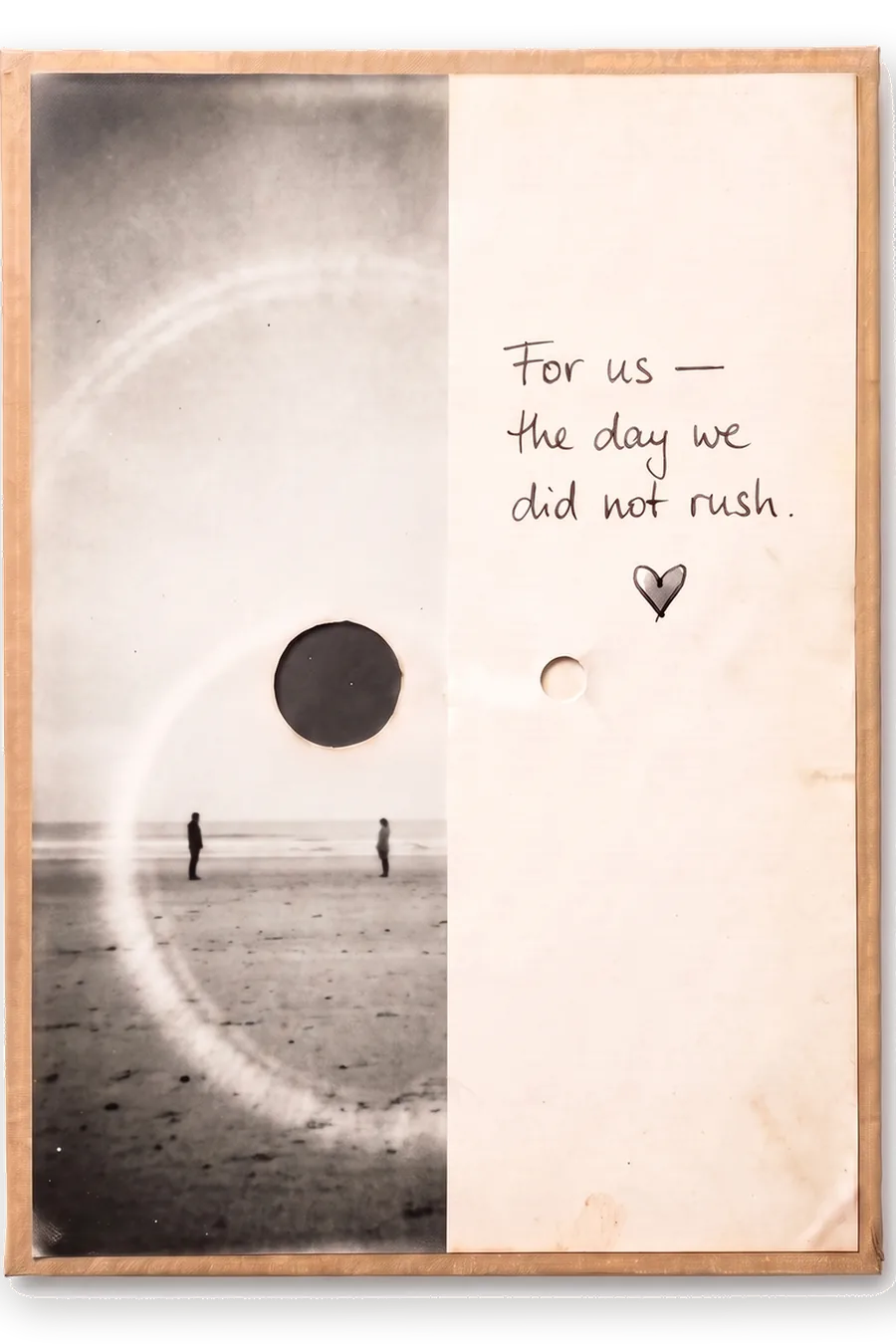
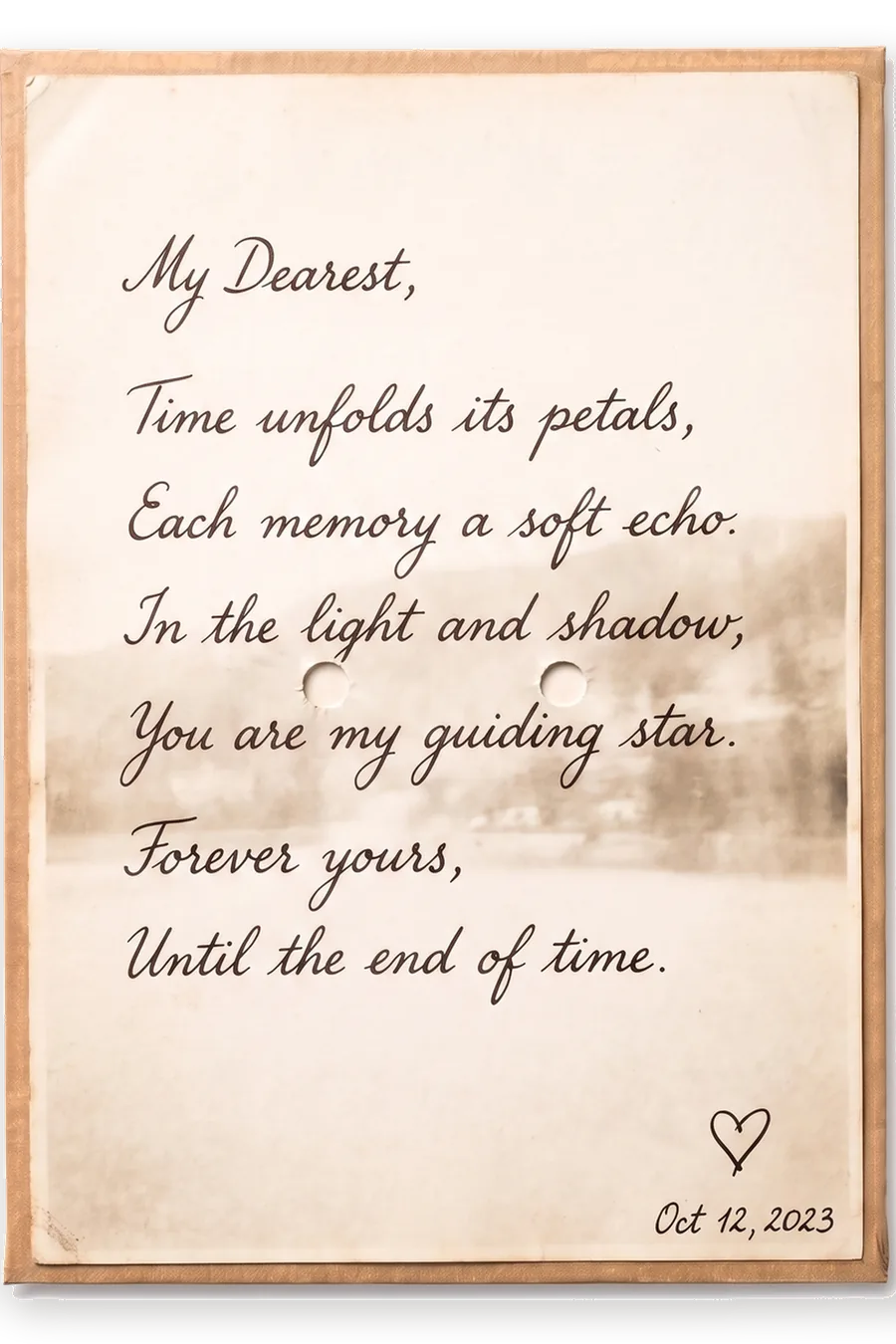
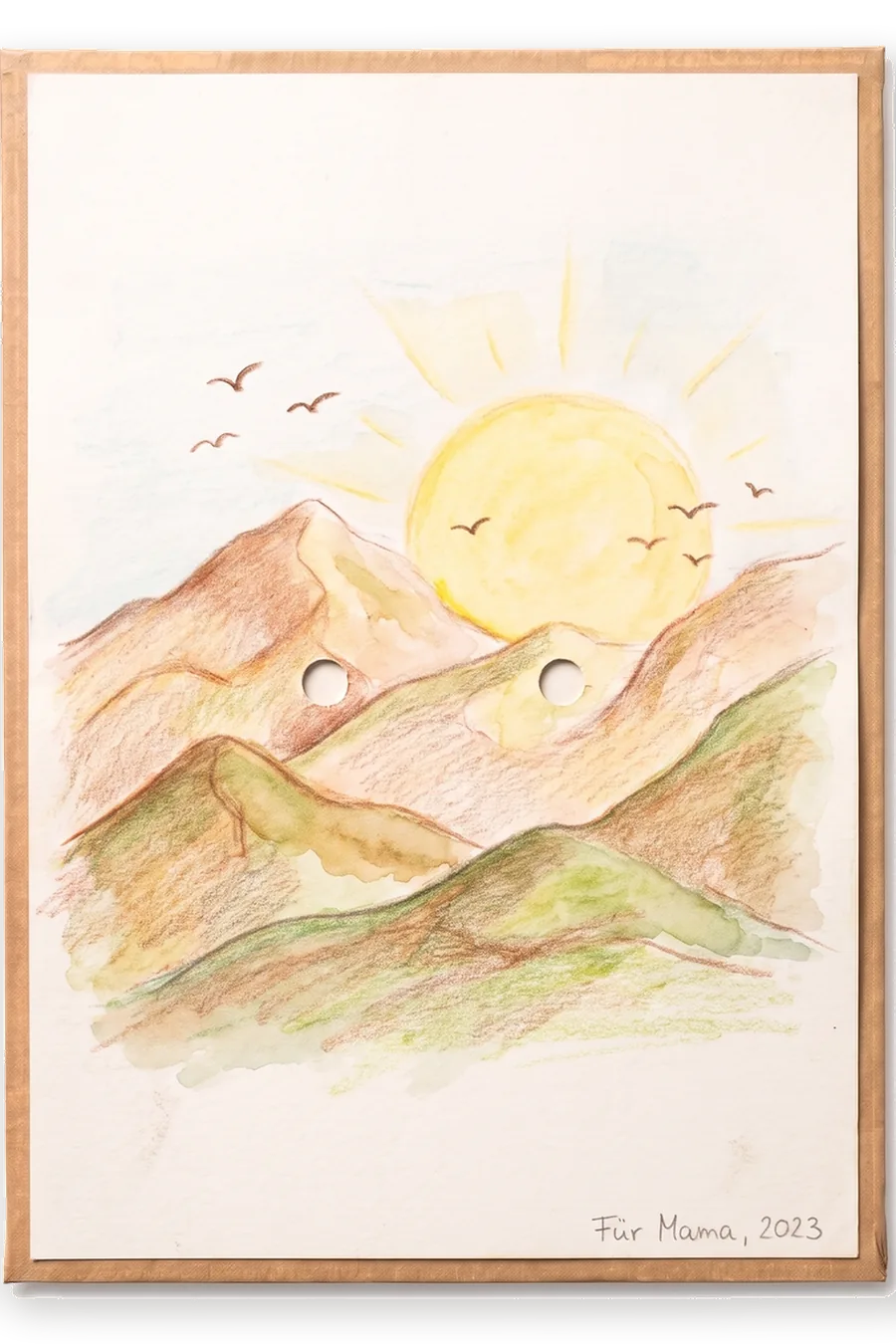
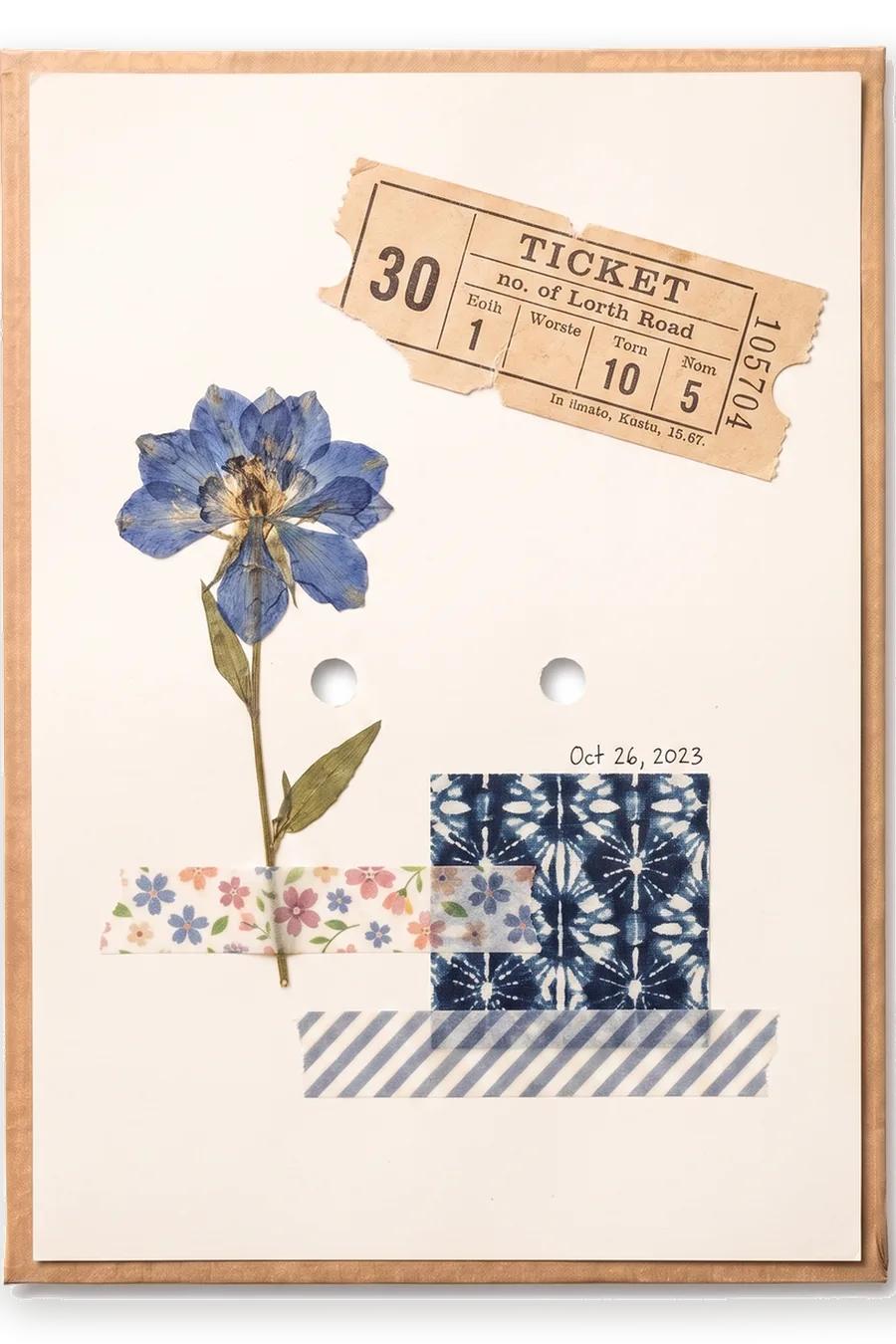
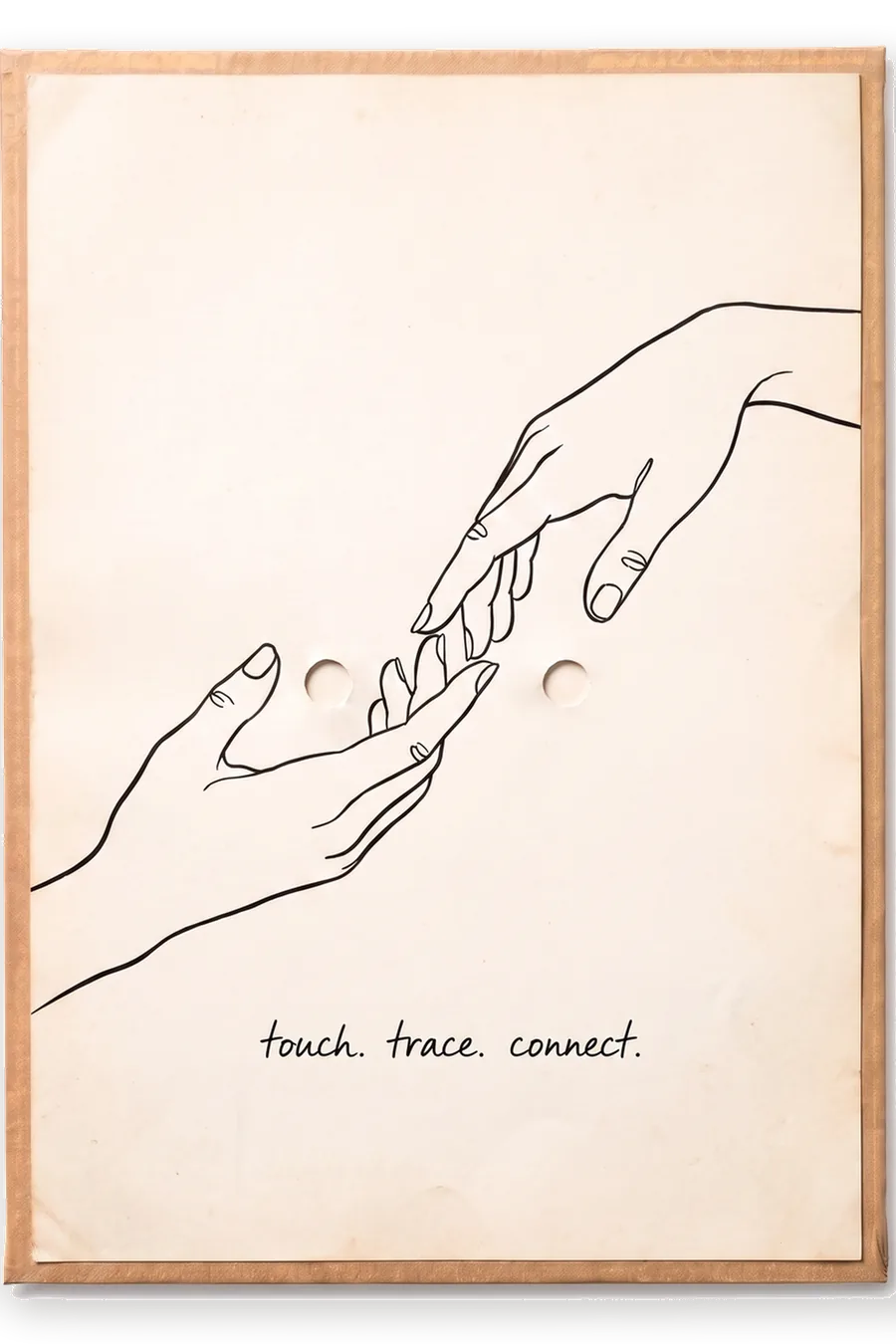
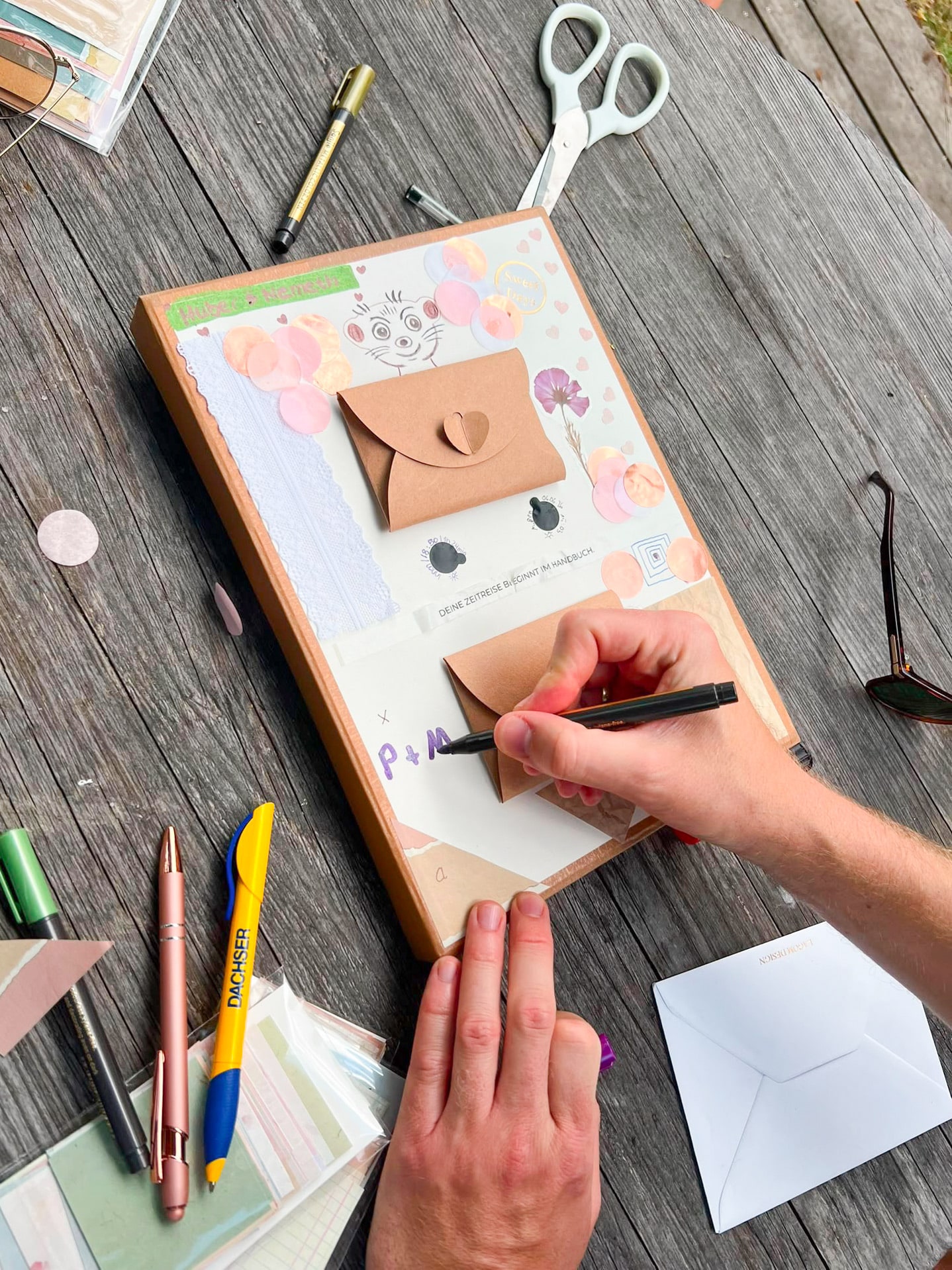
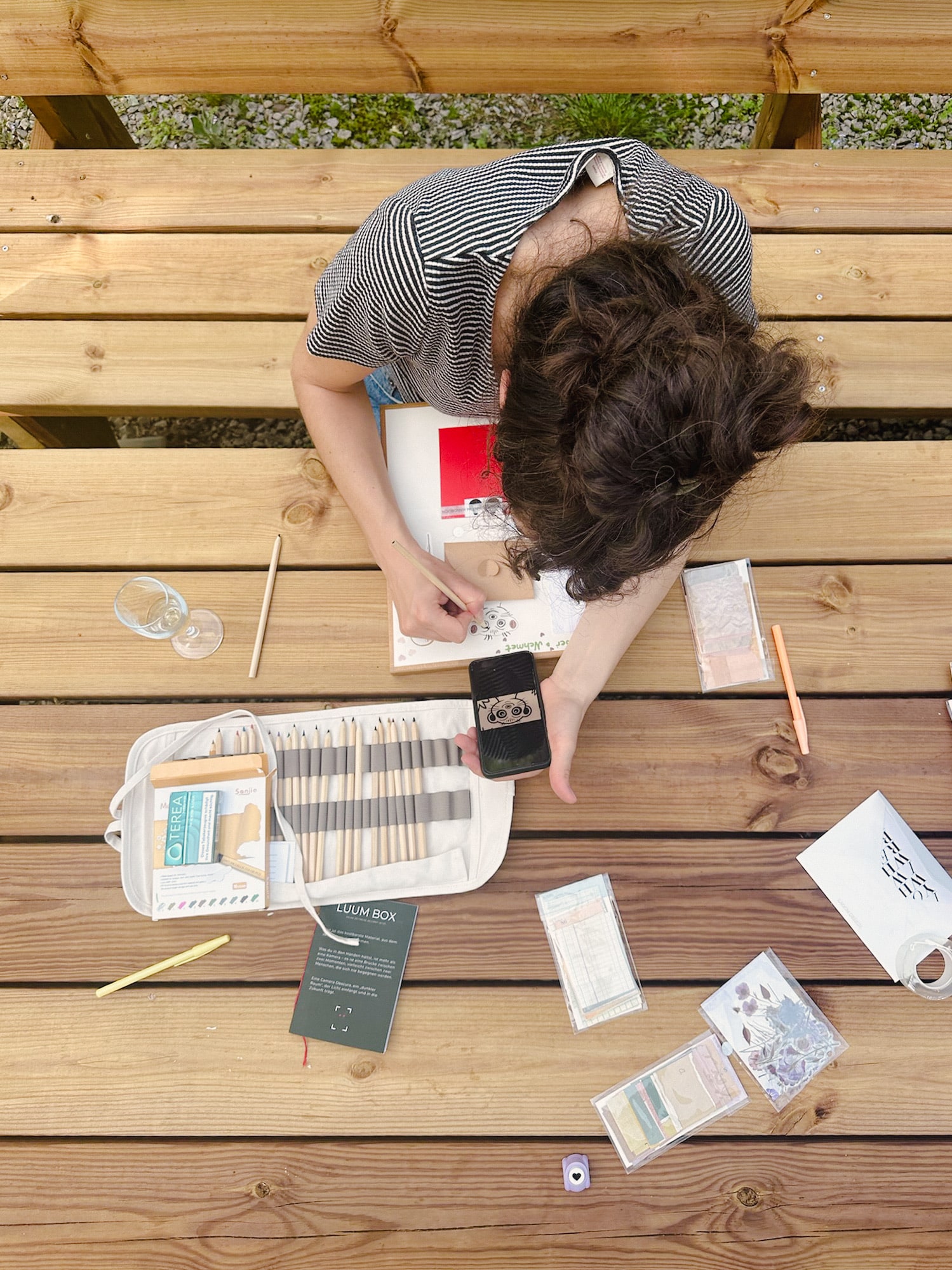
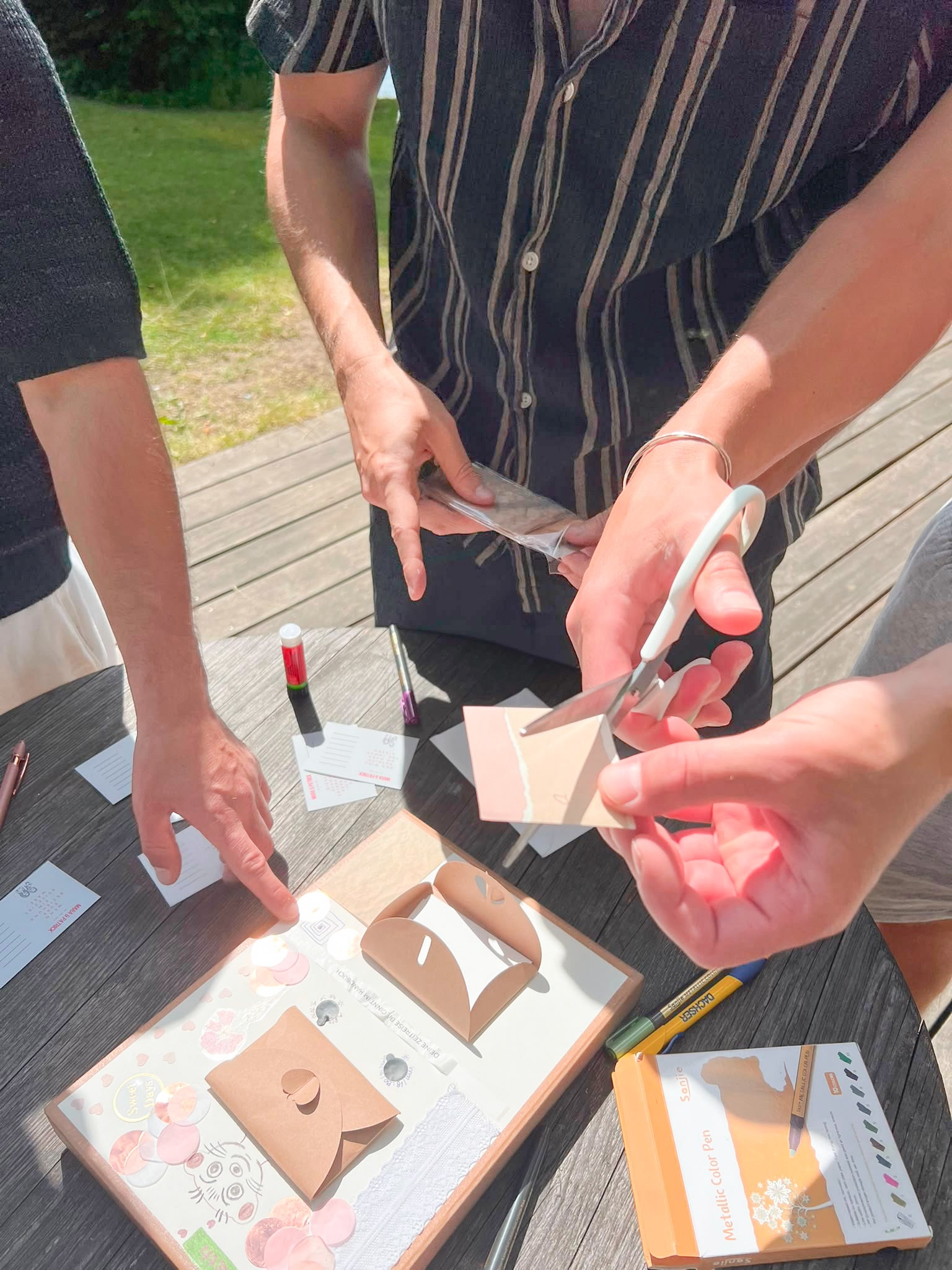
You decorate the front of the camera yourselves: drawings, photos, a few handwritten words, a date. The negative inside stays your shared picture.
What comes out of it
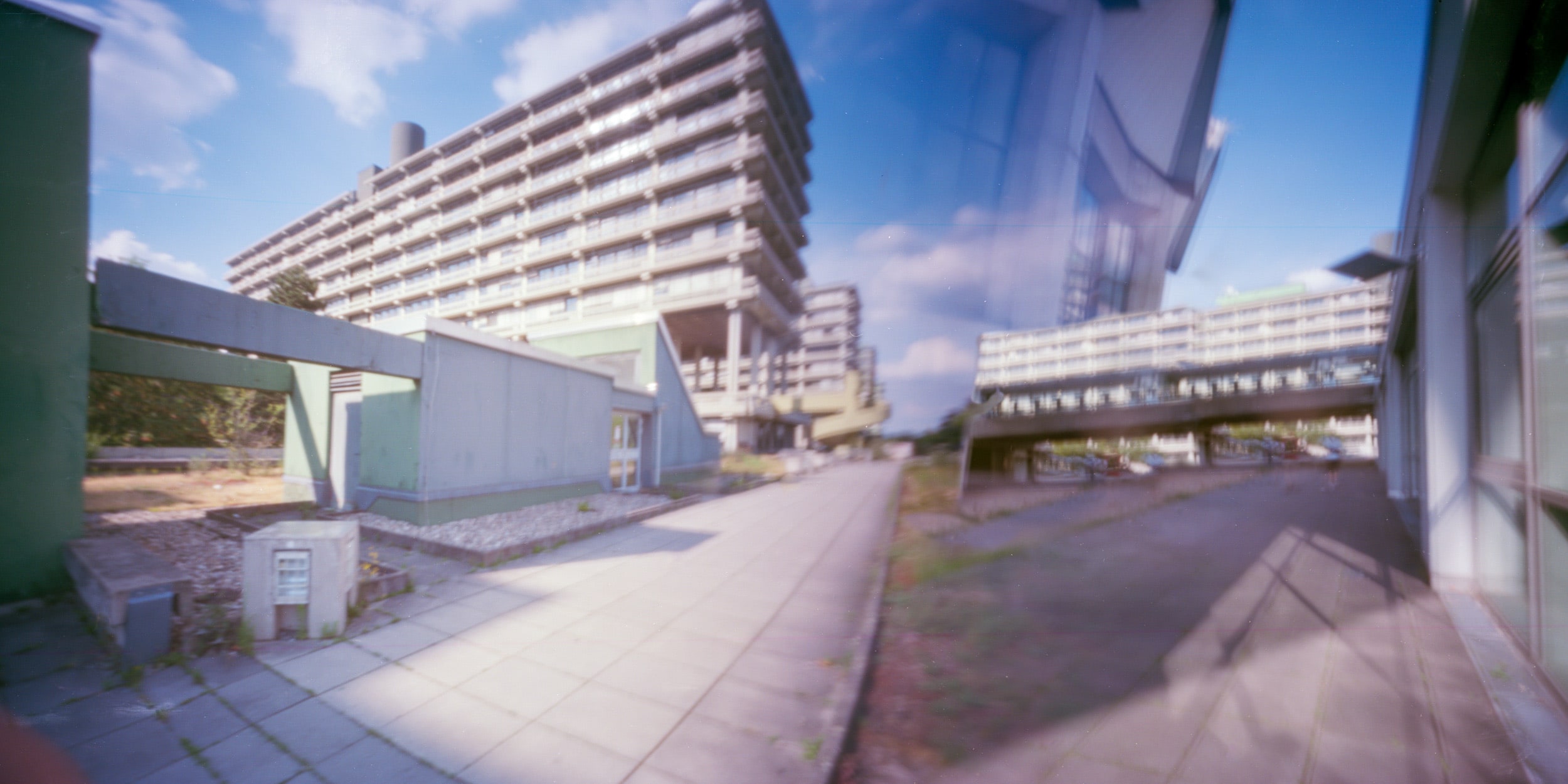
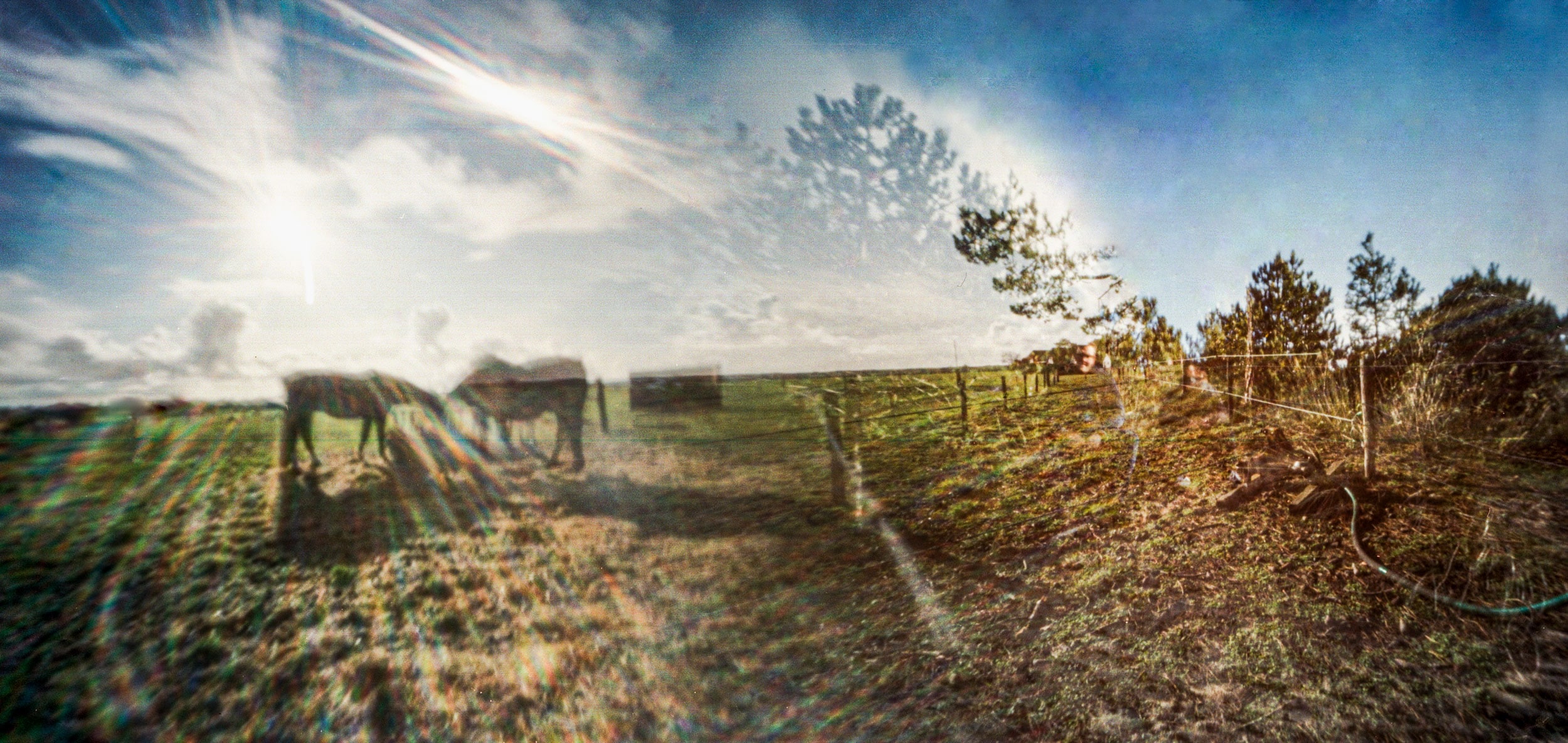
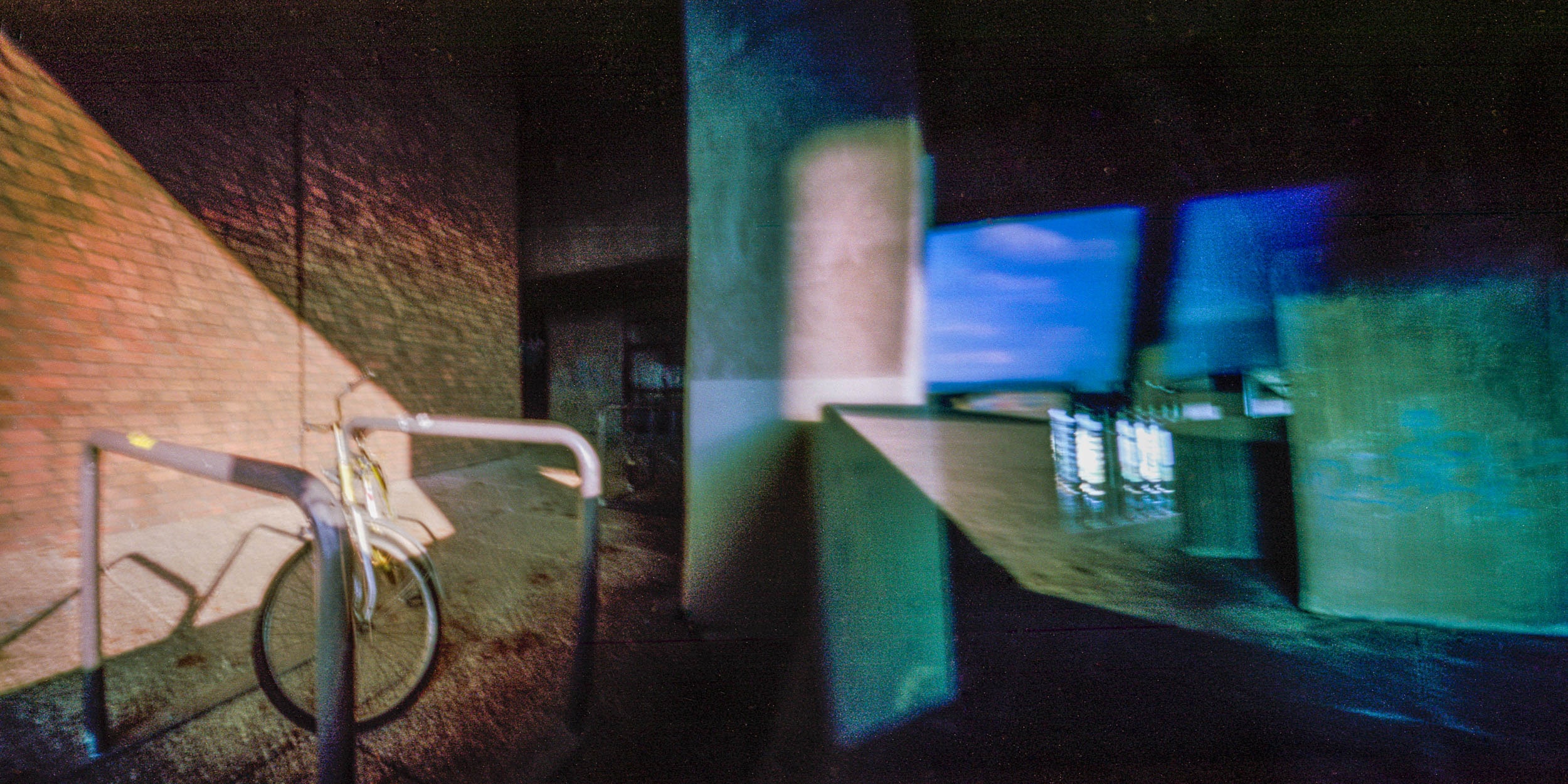
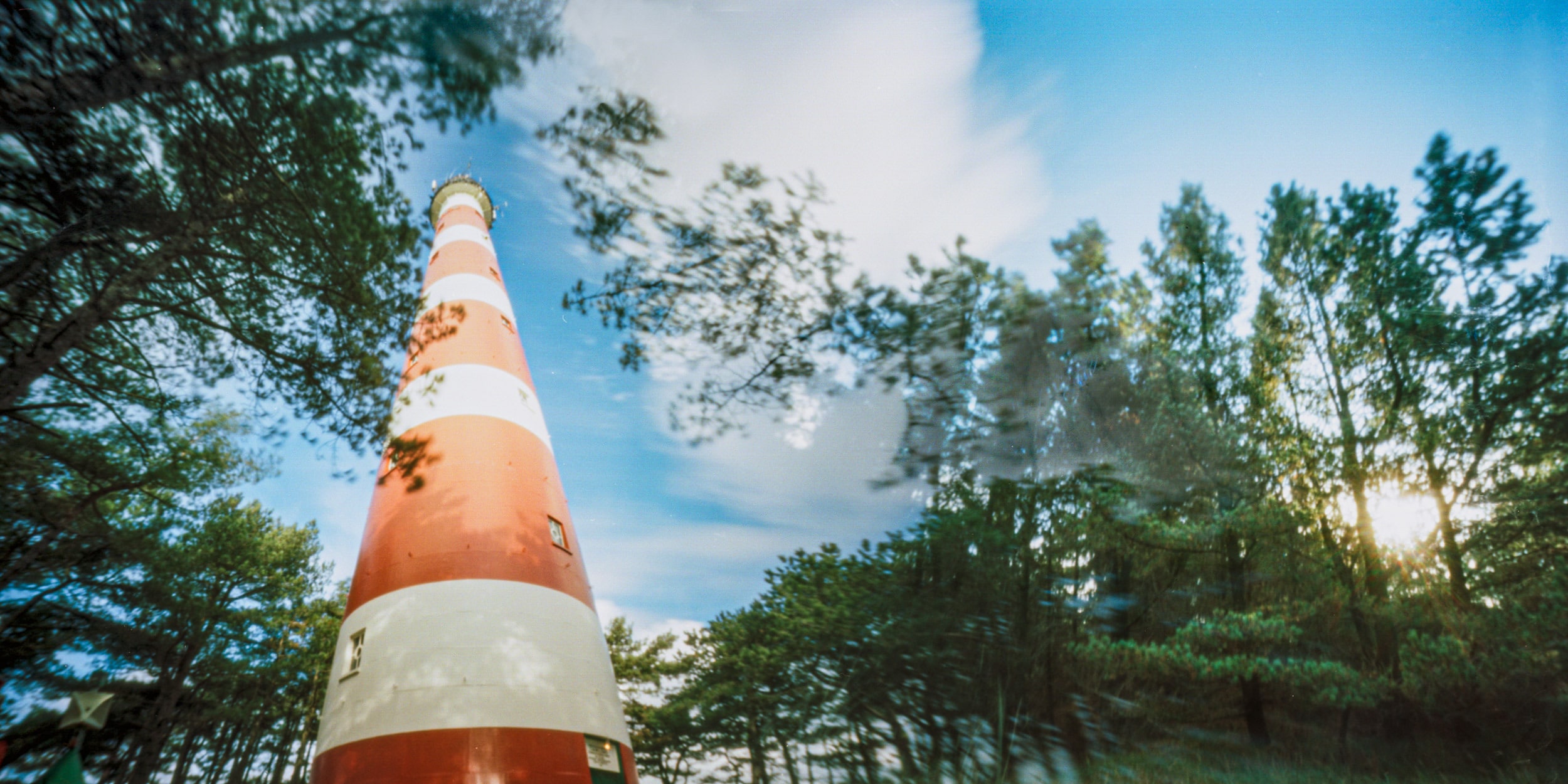
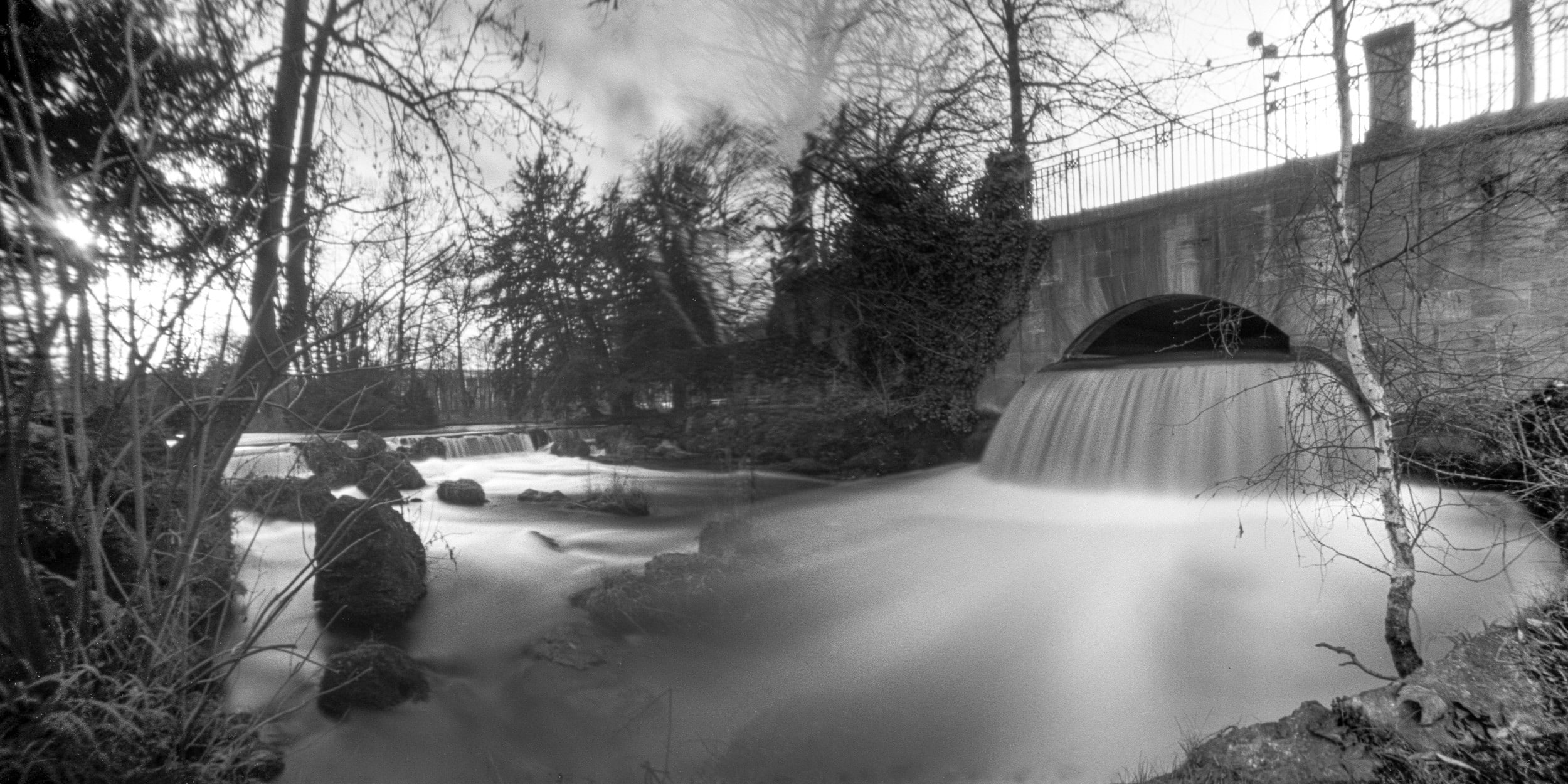
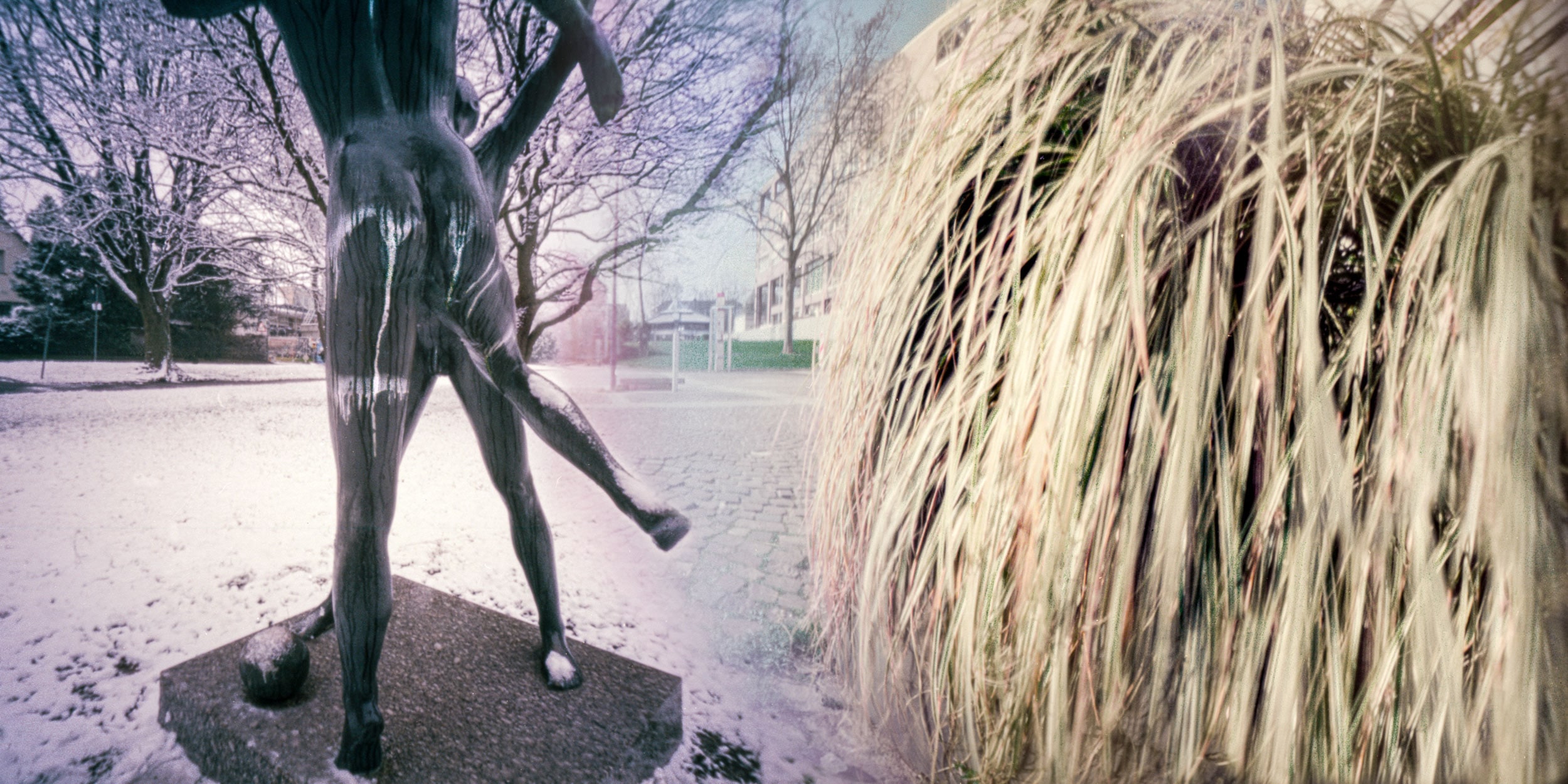
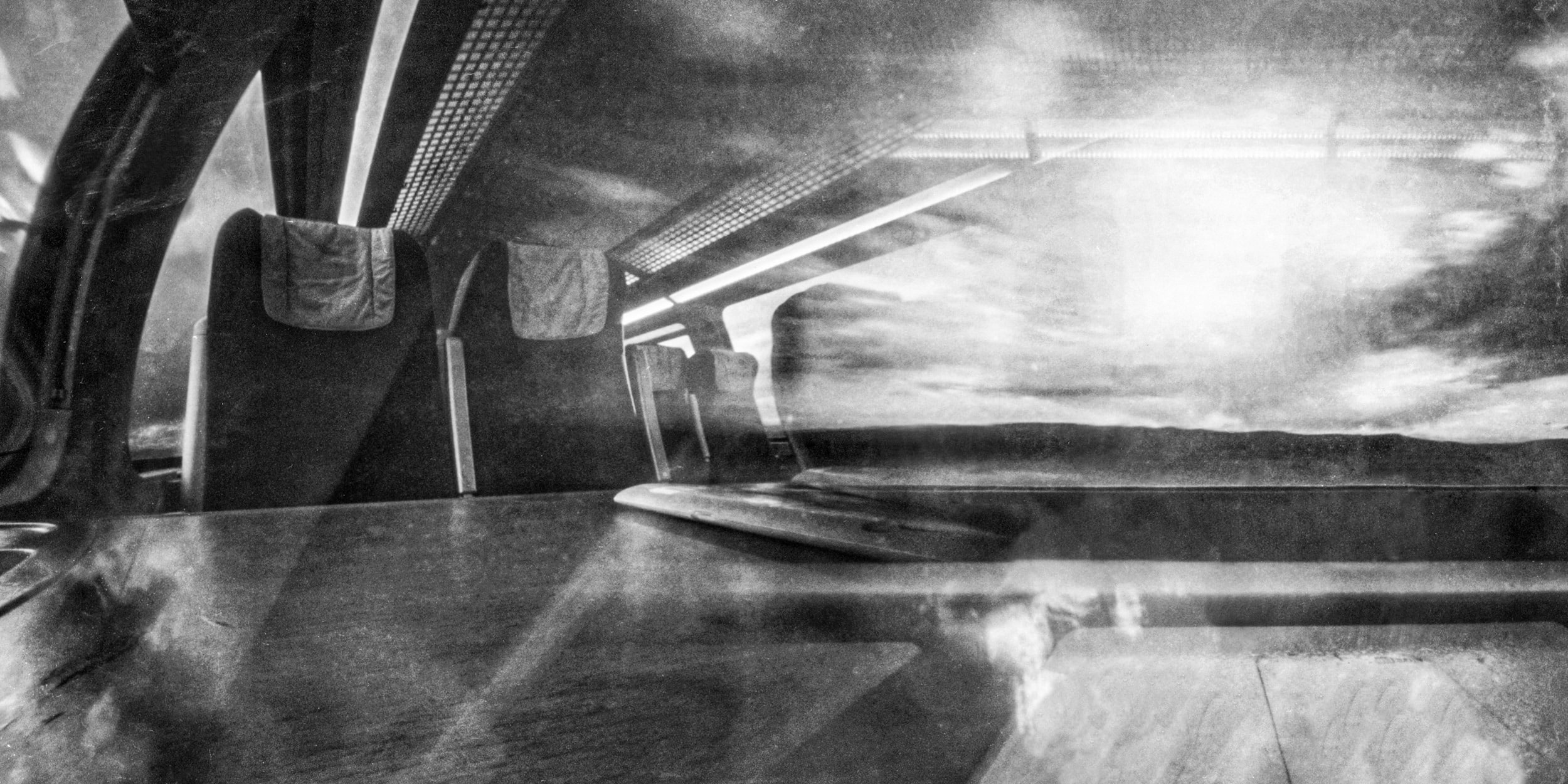
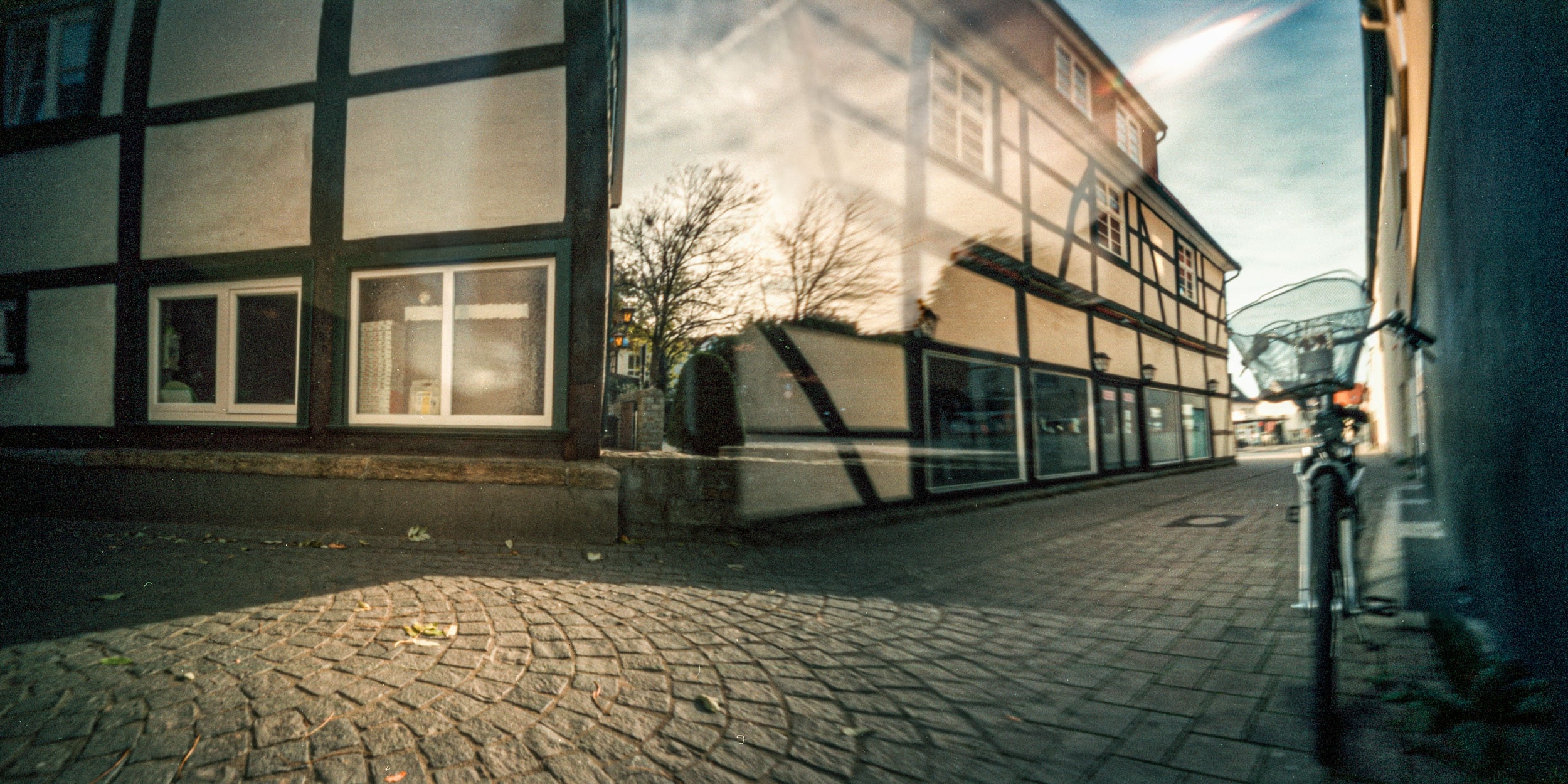
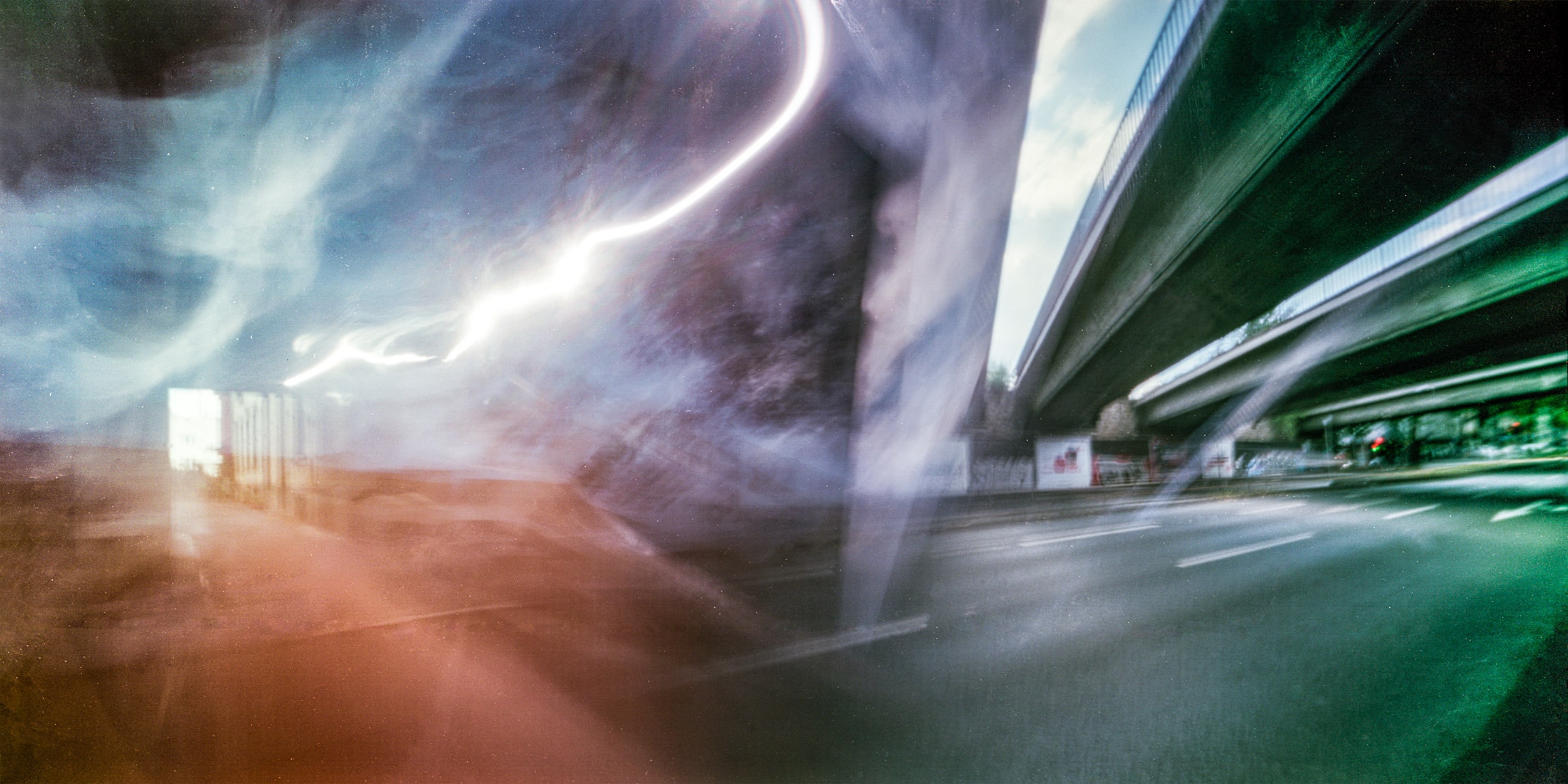
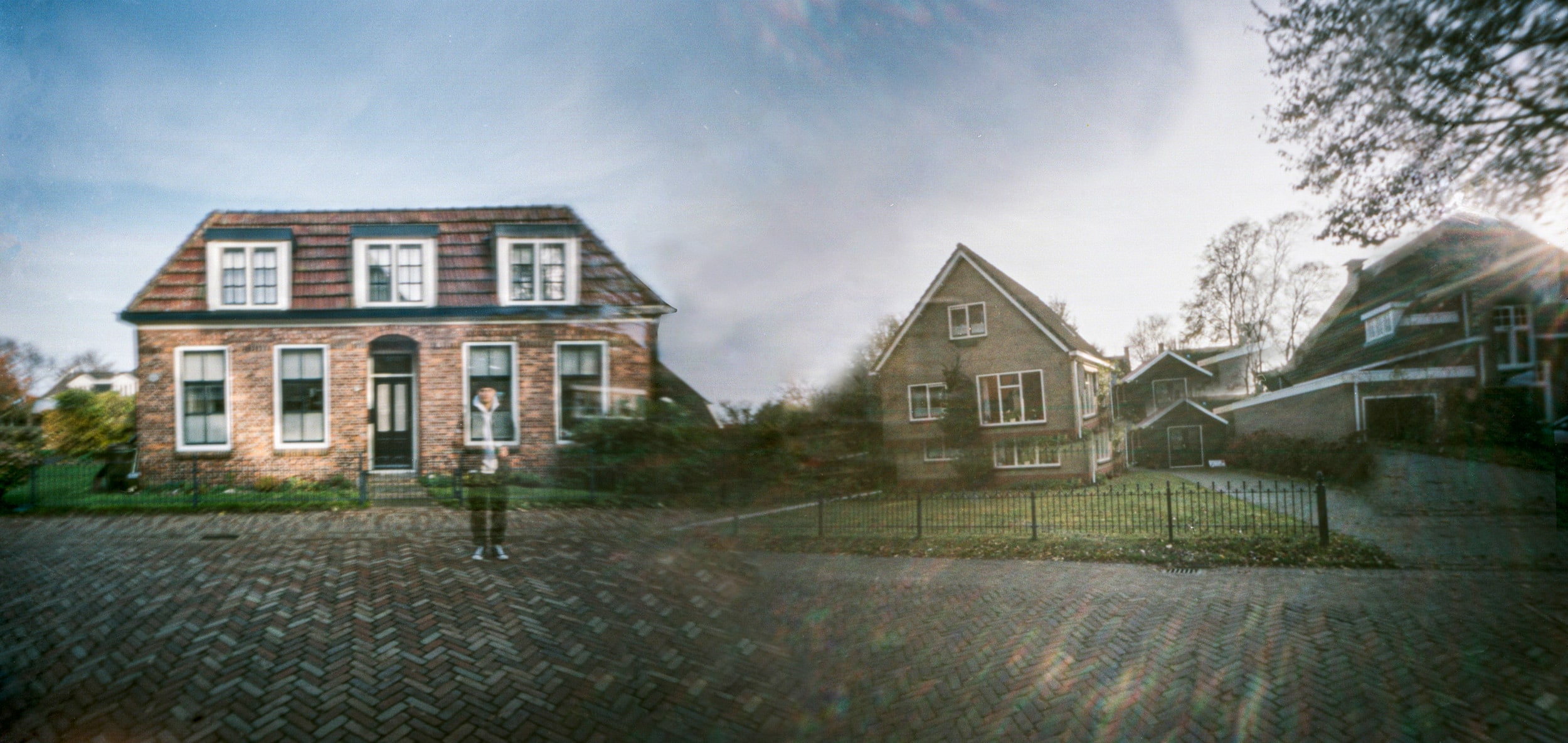
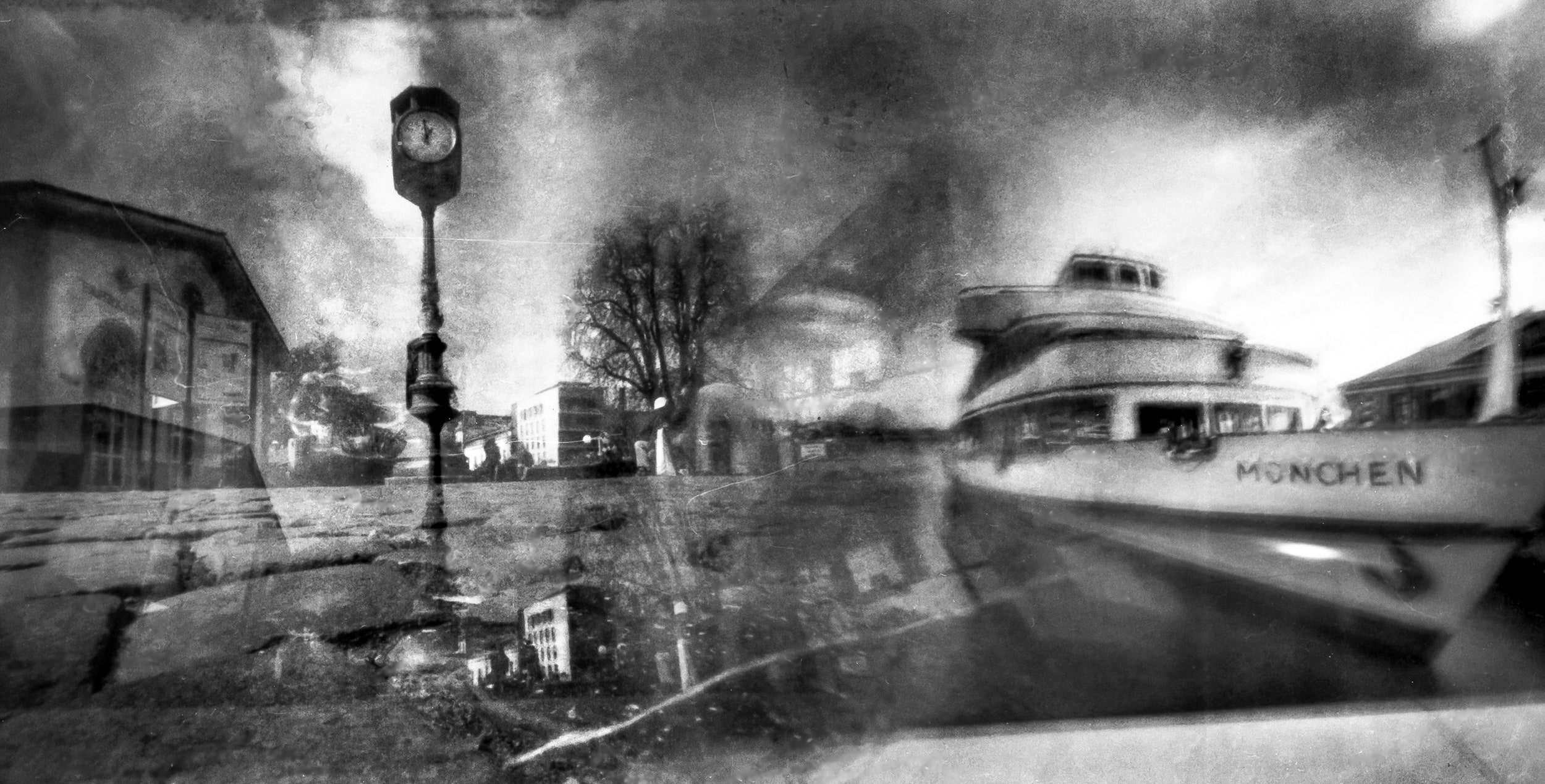
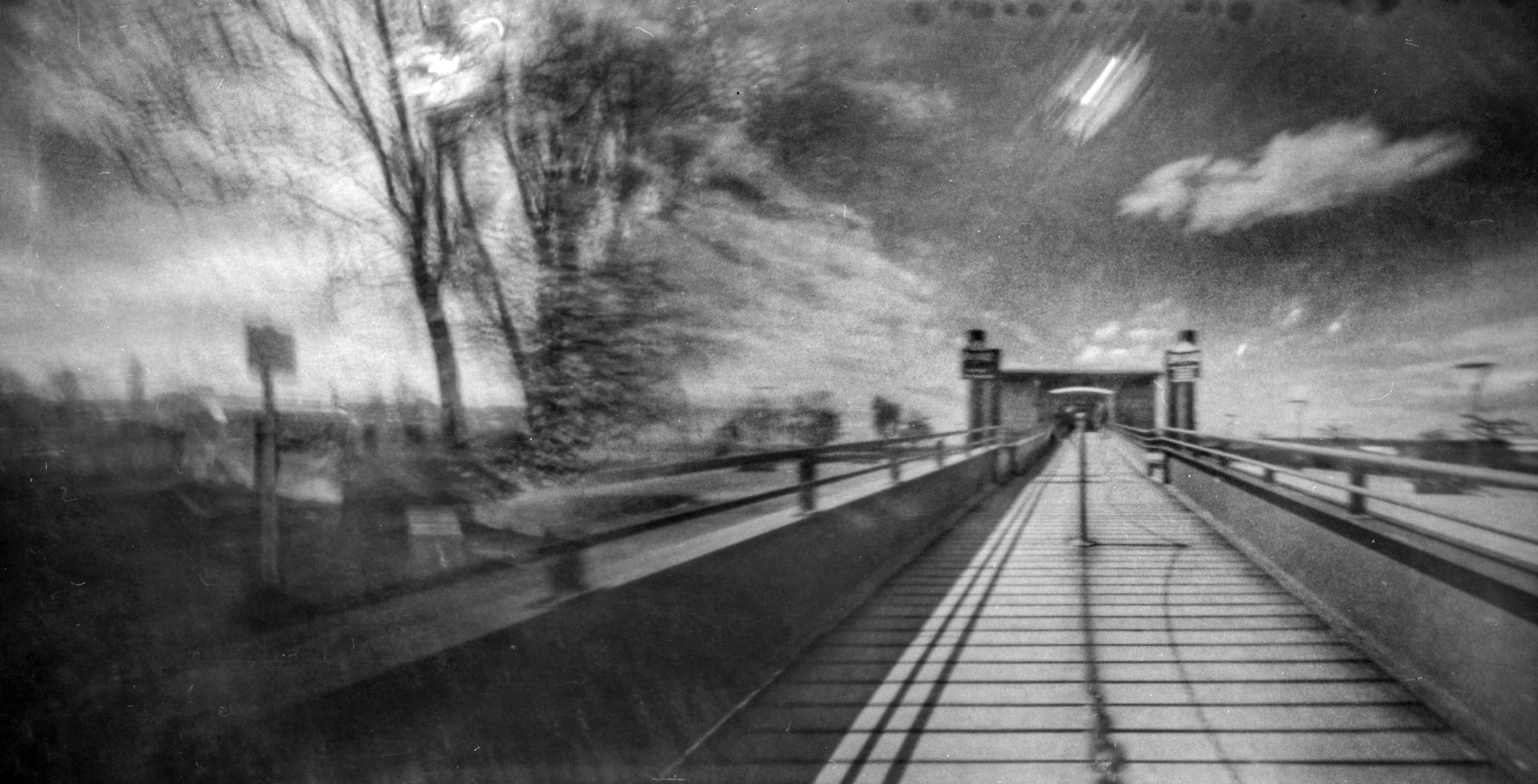
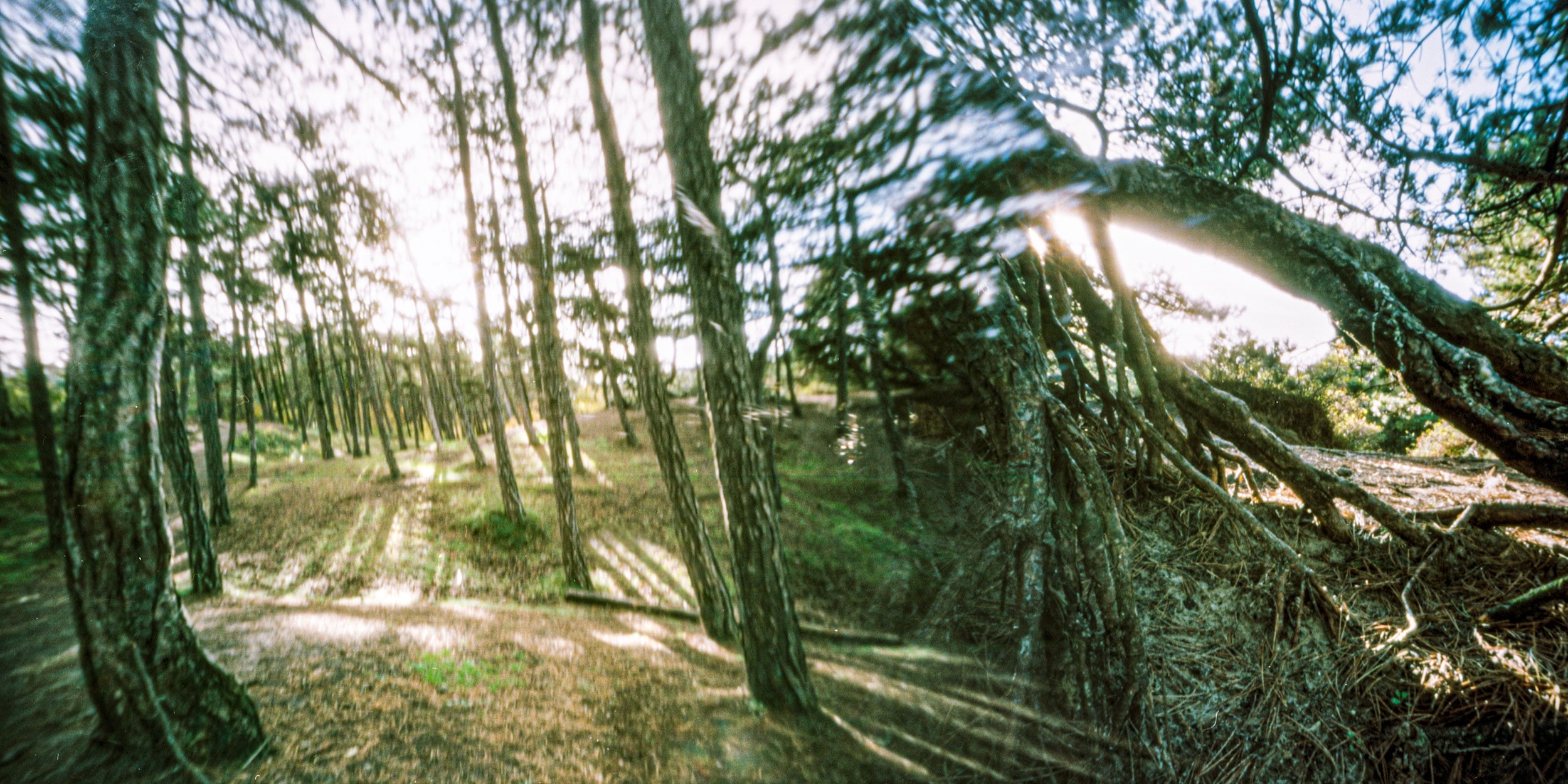
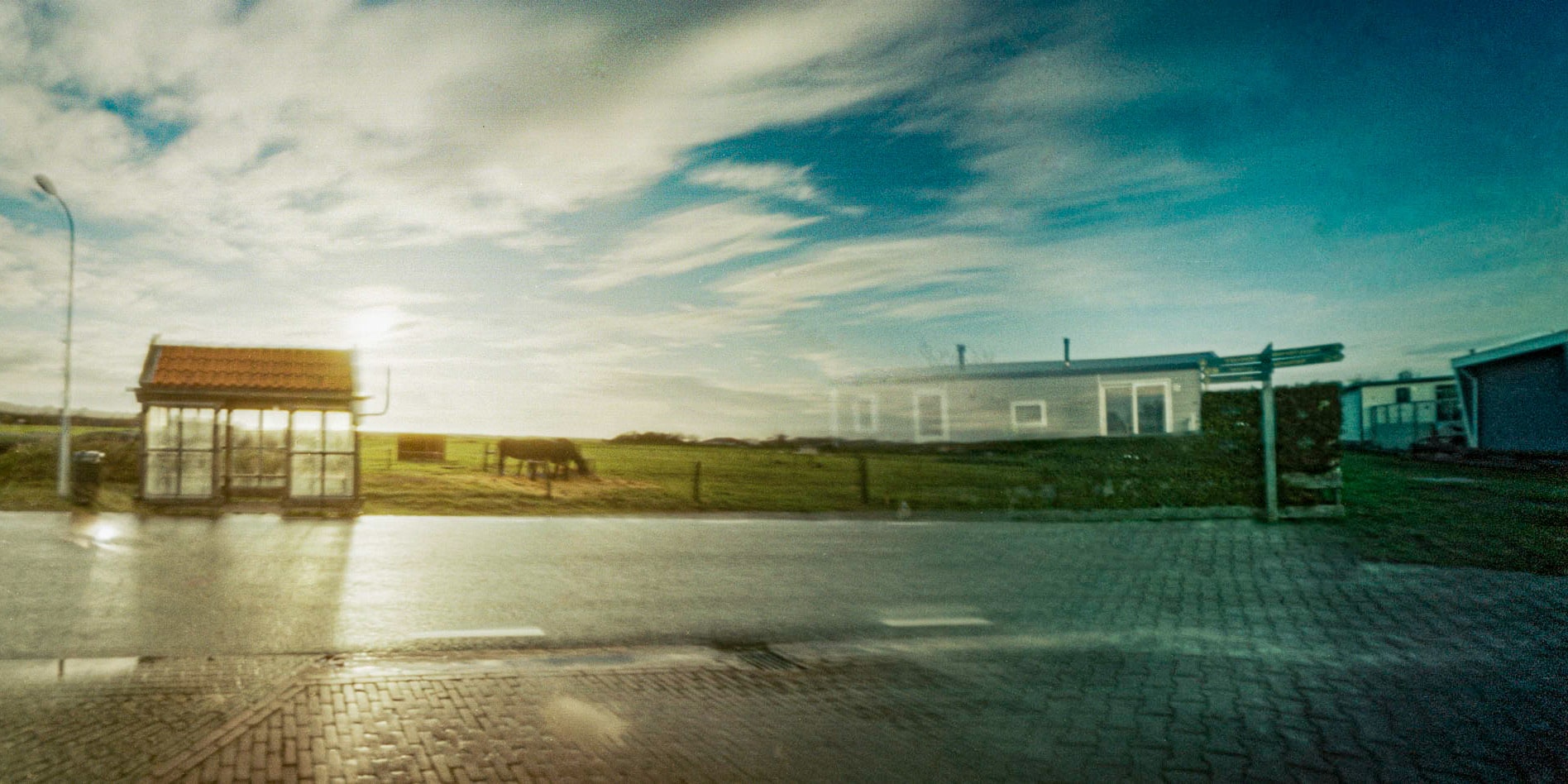
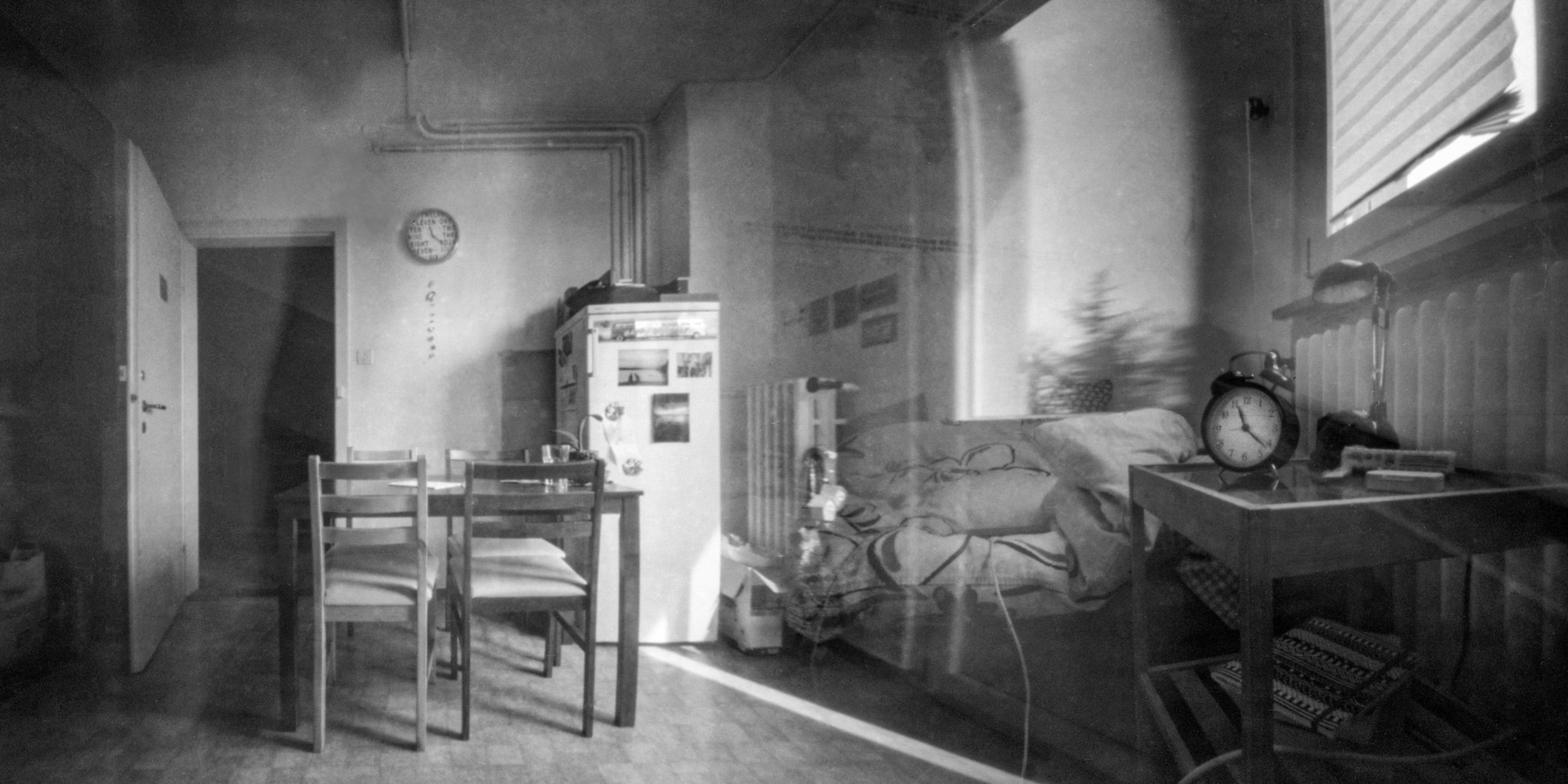
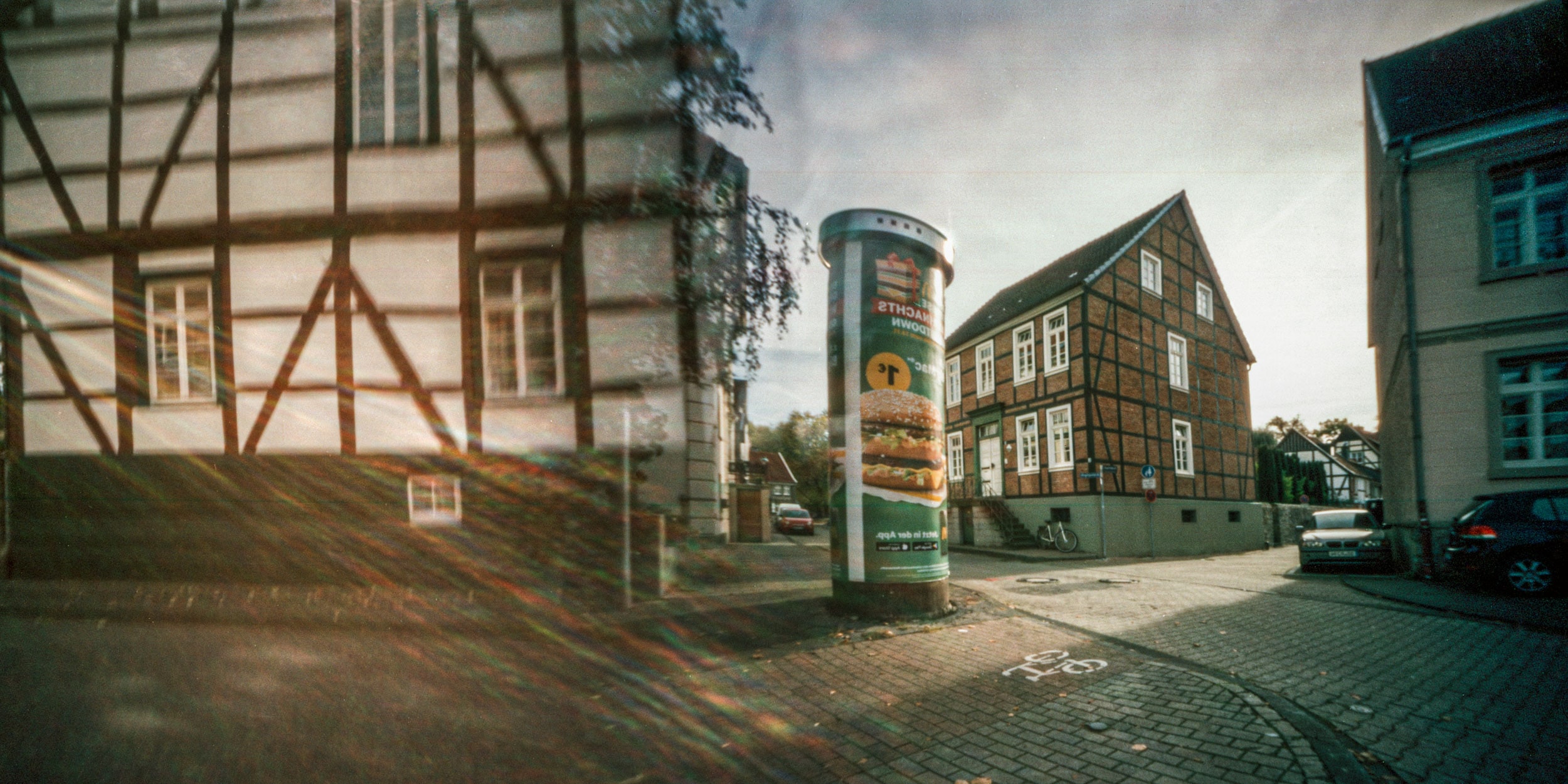
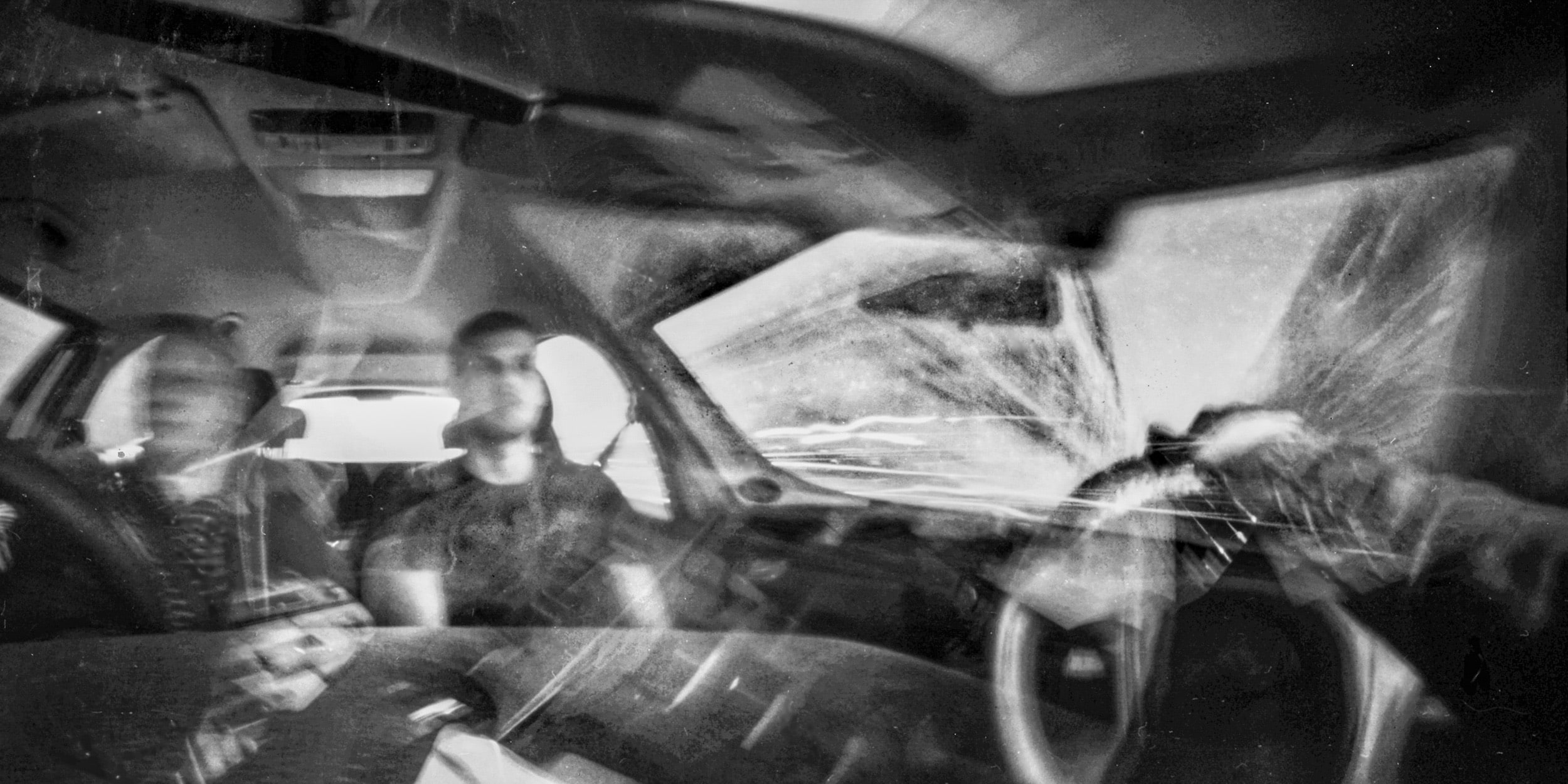
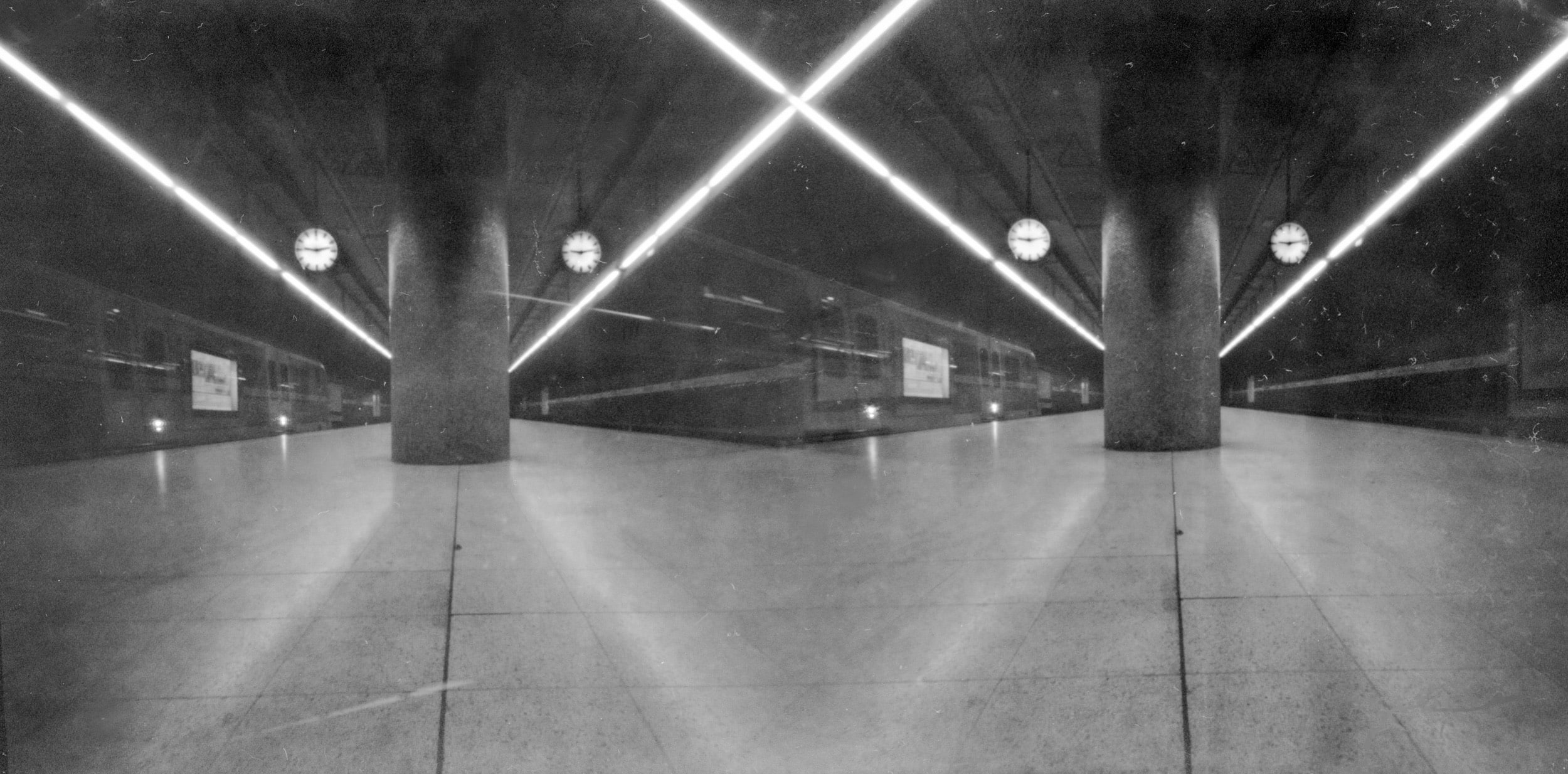
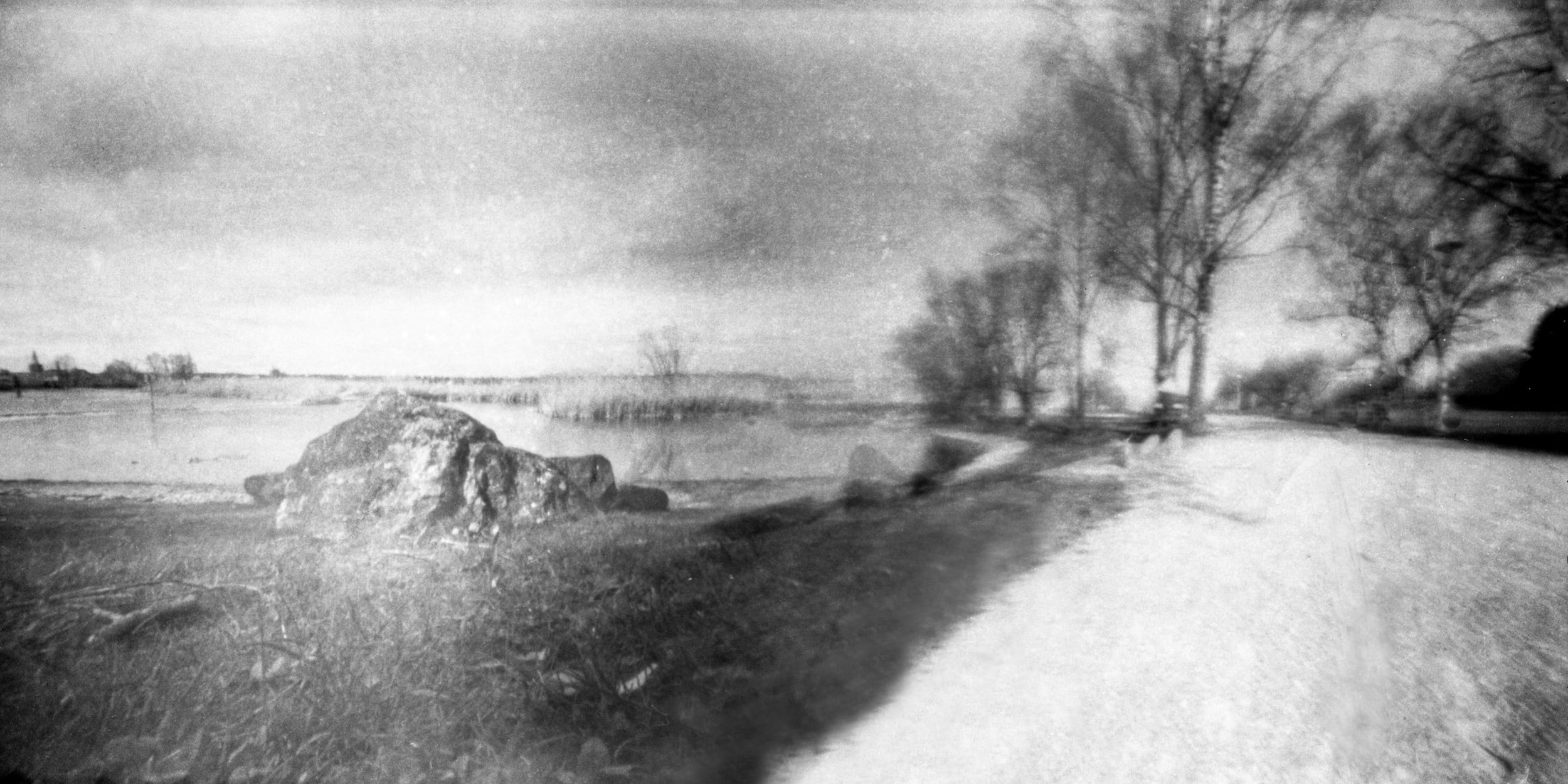
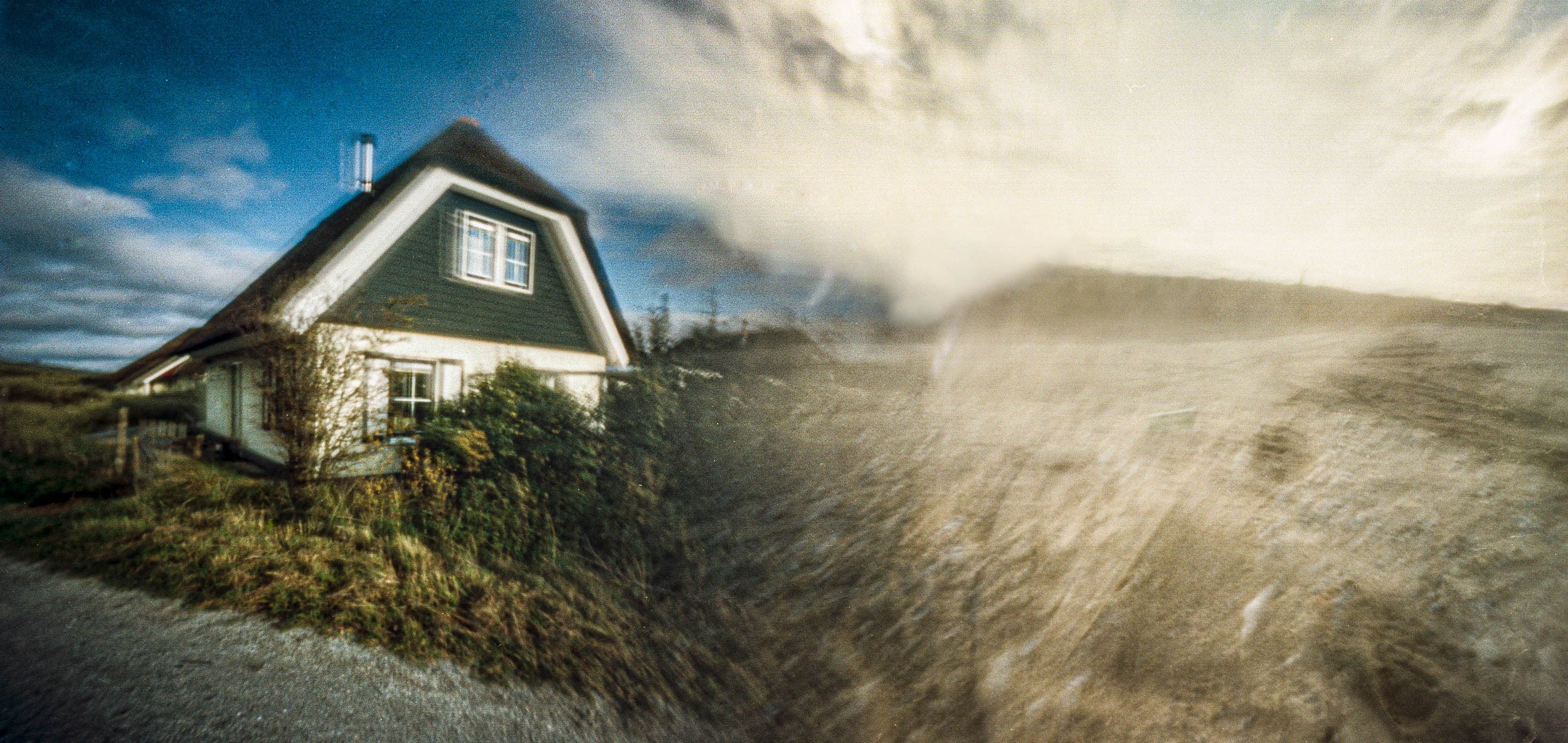
Every picture here was made through a 0.3 mm hole onto photo paper and developed in a darkened kitchen. Soft, distorted, unsharp at the edges: this is how the camera sees.
And who builds it
Specs
- Picture format
- approx. 10 × 15 cm (A6)
- Picture look
- Black-and-white, soft and painterly: the negative in warm sepia, the positive in cool indigo blue after inverting — not a sharp digital photo
- Dimensions
- 230 × 315 × 30 mm (W × H × D)
- Exposure
- from 4 s, hours in very low lightCalculate exposure time →
- Material
- Cardboard, light-sensitive photo paper, aluminium pinhole, 0.3 mm acupuncture needle
- Weight
- 180 g
- Numbering
- stamped, sequential from 0001
Manufacturer
- Name
- Both In Time, Jan Zajfert
- Address
- Gutenbergstraße 96, 70197 Stuttgart, Deutschland
- hello@bothintime.com
- Batch / Model number
- Both In Time, Modell 2026 · Seriennummer gestempelt, fortlaufend ab 0001
- Safety warnings
Contains a sharp needle. Not a toy, not suitable for children under 14. All three developer ingredients are food: instant coffee, vitamin C and baking soda. Baking soda is an approved food additive (E500) and is not classified as hazardous in the EU. The mixed developer is still not a drink and does not belong in your eyes; wash your hands after mixing. Dispose of used developer down the drain with plenty of water.
Frequently asked
A camera without a lens. Instead of glass, a tiny 0.3 mm hole focuses light onto the photo paper. It is the oldest form of photography. It needs only light, time, and patience. No power, no electronics, nothing that can break.
From four seconds, depending on the light. Bright sun is quick; indoors or at dusk takes longer, and in very low light it can run to hours. A tripod or a steady surface helps, because the camera does not forgive a shaky hand. Our exposure helper does the maths for you.
A developer made from instant coffee, vitamin C, and baking soda: ingredients from the supermarket and drugstore, under €5 together. The coffee develops the image, vitamin C speeds it up, the soda makes the solution alkaline. No special lab, no toxic drain. The recipe is in the online guide; you buy the ingredients yourself.
Black-and-white, but not neutral grey: the negative comes out of the Caffenol in a warm sepia tone, soft and painterly, like the example pictures on this page. You photograph it and turn it into a positive with the negative-positive helper — which gives it the cool, indigo-blue tone. In the end you have two things: the original negative on an A5 sheet of photo paper, and the positive as a digital image you can share or print.
Yes, completely dark. The red light does not replace the darkness: it is only the one light allowed to be on in the dark room, because photo paper responds to blue and green and is nearly blind to red. Wait for night, tape over the windows, or use a room without windows, such as a bathroom or cellar. Only once it is truly dark do you switch on the red lamp and open the camera. The red foil for it comes with every camera.
Every camera is made by hand in Stuttgart, to order rather than from stock. As soon as your payment arrives we start building: 5 working days of hand work. The camera is then in transit 2–5 working days within Germany, 4–9 to Switzerland. That is 7–10 working days in Germany and 9–14 to Switzerland. We currently deliver within Germany and to selected countries outside the EU; the list is shown during checkout.
Yes, you have a 14-day right of withdrawal, and it applies even once the camera has been opened. Unused and still sealed, you get the full amount back. If the camera was opened, light has reached the photo paper and exposed it: we then deduct compensation for that loss of value, which can amount to the full purchase price. So only open the camera if you intend to keep it. You pay the return shipping unless the camera is faulty.
As long as the hole is taped shut and no light reaches the paper, an exposed half waits weeks or months without trouble. Stored dry and dark, or closed with the seal sticker and marked with a date, years are possible too. That is exactly what the camera is built for: some develop after a few weeks, some wait on purpose until the next milestone.
Yes. In Stuttgart we walk through the whole practice in one afternoon: understand the camera, expose together, develop in Caffenol. Six seats per date. You will find the next dates under Workshops.
Yes, from six cameras for teams, events, or farewells. The price stays at €79 per camera, we invoice and ship to one address. On request, we hand-letter each camera individually. Get in touch via the For Businesses page.